Secure 2.0 Student Loan Matching: Employers Match 100% Debt in 2026
Advertisements
Balancing education debt with long-term financial security has forced millions of workers to delay saving for the future. However, innovative workplace benefits are finally bridging the gap between monthly debt obligations and building wealth.
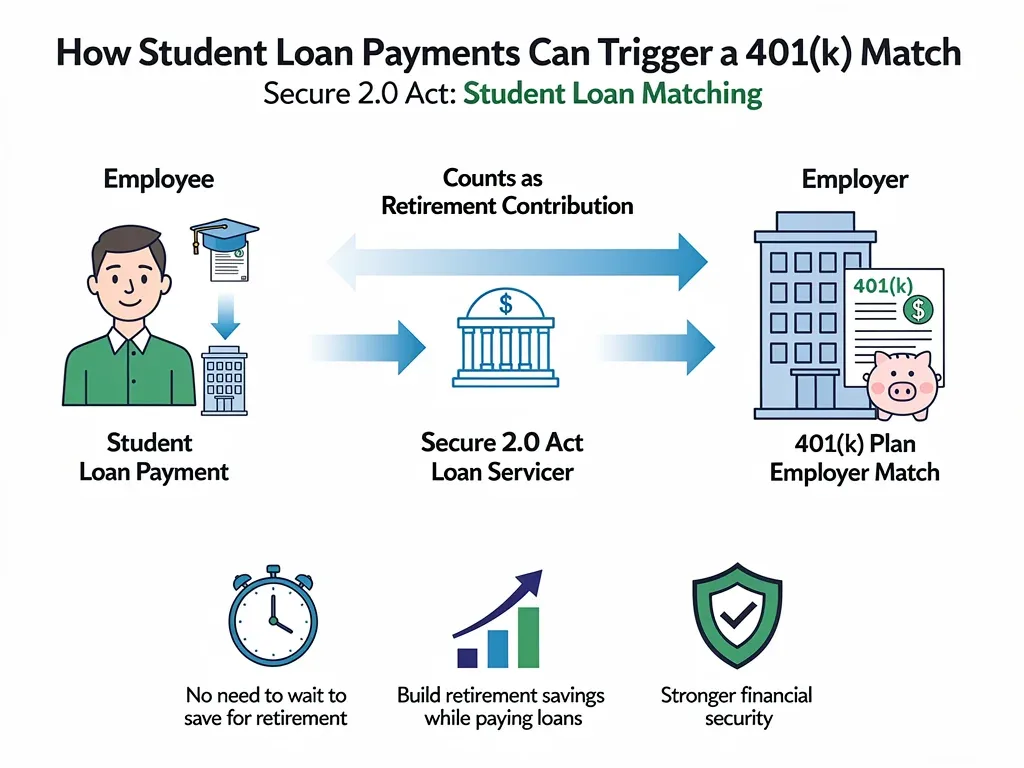
Under the expanded Secure 2.0 Student Loan Matching framework, participating companies can treat your education debt payments as qualified retirement contributions. This policy enables workforce members to capture full employer 401(k) matches without choosing between paying off loans and building nest eggs.
Activating these employer-sponsored repayment perks requires understanding self-certification procedures and plan eligibility rules. Here is how Section 110 works, what compliance rules apply, and how to maximize your benefits.
The Dawn of a New Era: Secure 2.0 Student Loan Matching
The Secure 2.0 Act of 2022 introduced a groundbreaking provision set to revolutionize how employees manage student debt and save for retirement. Starting in 2026, employers will have the option to treat qualified student loan payments as elective deferrals for matching contribution purposes.
This means that if an employee makes a payment on their student loan, their employer can contribute a matching amount to the employee's 401(k), 403(b), or 457(b) plan. This innovative approach aims to address the dual financial challenges many young professionals face: student loan debt and inadequate retirement savings.
The provision, officially known as the “employer match for student loan payments,” is a significant step towards financial wellness. It acknowledges the burden of student debt while simultaneously encouraging long-term financial planning, providing a crucial benefit for those navigating both obligations.
Understanding the Mechanics of Secure 2.0 Matching
The core of this new benefit lies in its simplicity and directness. Employers can now make contributions to an employee's retirement account that are contingent on the employee's student loan payments, effectively rewarding them for addressing their debt.
This mechanism is designed to be equitable, ensuring that employees burdened with student loans can still benefit from employer-matched retirement contributions, a perk often missed by those prioritizing debt repayment. The flexibility offered allows employers to tailor their programs to best suit their workforce.
The Internal Revenue Service (IRS) will provide further guidance on the specifics of implementation, but the overarching goal is clear: to level the playing field for employees with student debt. This initiative promises to be a game-changer in employee benefits, especially for organizations seeking to attract and retain top talent.
Eligibility and Implementation for Employees
Employees making qualified student loan payments will be eligible for this matching contribution. The definition of a "qualified student loan payment" is crucial and will be clarified by regulatory bodies, ensuring consistency across various loan types.
For employees, it means they no longer have to choose between paying down student debt and saving for retirement. They can do both, with their employer's help. This dual benefit significantly improves their financial outlook and reduces long-term stress.
Employees must notify their employer of their student loan payments.
The employer then calculates the matching contribution based on their plan rules.
Contributions are made to the employee's designated retirement account.
Employer Benefits and Strategic Advantages
For employers, offering Secure 2.0 student loan matching presents a compelling competitive advantage in the labor market. It demonstrates a commitment to employee financial well-being, enhancing recruitment and retention efforts.
This benefit can particularly appeal to younger generations entering the workforce, who often carry substantial student loan debt. It positions companies as forward-thinking and employee-centric, fostering loyalty and productivity.
Attracts and retains highly skilled talent burdened by student debt.
Improves employee morale and financial wellness.
Enhances the company's overall benefits package and corporate image.
Impact on Retirement Savings and Financial Wellness
The introduction of Unlocking Secure 2.0 Student Loan Matching is expected to have a profound impact on retirement savings rates, particularly among younger demographics. Historically, student loan payments have often precluded consistent retirement contributions.
This new provision removes a significant barrier, allowing employees to build their retirement nest egg even while actively tackling their student debt. Experts predict a noticeable increase in 401(k) participation and contribution levels among those eligible for the match.
Beyond the direct financial benefits, this initiative promotes a holistic approach to financial wellness. It alleviates mental stress associated with debt, enabling employees to focus more on their work and overall well-being, leading to a more engaged and productive workforce.
Navigating the Regulatory Landscape and Future Guidance
While the Secure 2.0 Act lays the groundwork, the specifics of its implementation for Unlocking Secure 2.0 Student Loan Matching will largely depend on forthcoming regulatory guidance. The IRS and Department of Labor are expected to issue detailed rules and clarifications.
These guidelines will address critical aspects such as the definition of qualified student loan payments, reporting requirements for both employees and employers, and potential anti-discrimination testing. Businesses must stay abreast of these developments to ensure compliance.
Proactive engagement with benefits consultants and legal counsel will be essential for employers to design compliant and effective student loan matching programs. The aim is to create a seamless process that maximizes benefits for employees while minimizing administrative burden for companies.
Key Considerations for Employers
Employers considering offering this benefit need to evaluate several factors. This includes understanding their current benefits structure, assessing the financial implications, and communicating the new option effectively to their workforce.
Developing clear policies and procedures for verifying student loan payments and administering the matching contributions will be paramount. Transparency and ease of access will encourage greater employee participation.
Assess budget and potential costs of matching contributions.
Develop clear communication strategies for employees.
Ensure administrative systems are in place for tracking and verification.
Employee Action Steps for 2026
For employees, preparing for Unlocking Secure 2.0 Student Loan Matching involves staying informed about their employer's plans and understanding their own student loan details. Proactive engagement will ensure they can fully leverage this new opportunity.
Gathering documentation related to student loan payments and understanding their employer's specific enrollment process will be key. Employees should also consider how this benefit fits into their broader financial planning goals.
Stay updated on employer announcements regarding the benefit.
Maintain accurate records of student loan payments.
Consult financial advisors to integrate this benefit into personal financial plans.
The Broader Economic and Social Implications
The widespread adoption of Unlocking Secure 2.0 Student Loan Matching could have significant macroeconomic implications. By easing the burden of student debt, it could free up disposable income, potentially stimulating consumer spending and economic growth.
Moreover, it addresses a critical social equity issue, as student loan debt disproportionately affects certain demographic groups. This benefit can help close wealth gaps and promote greater financial stability across the population.
This policy reflects a growing recognition of the interconnectedness between student debt, retirement security, and overall economic health. It represents a progressive step towards a more financially resilient workforce and society.
Challenges and Considerations for Widespread Adoption
While the potential benefits of Unlocking Secure 2.0 Student Loan Matching are substantial, challenges for widespread adoption exist. These include the cost for employers, administrative complexities, and employee awareness.
Not all employers may immediately have the financial capacity or administrative infrastructure to implement such a program. Smaller businesses, in particular, might face hurdles in integrating this new benefit effectively.
Furthermore, ensuring employees understand and utilize this complex benefit will require robust communication and education campaigns. Overcoming these challenges will be crucial for the program's ultimate success and reach.
Anticipating the Future of Employee Benefits in 2026 and Beyond
The introduction of Unlocking Secure 2.0 Student Loan Matching signals a shift in the landscape of employee benefits. It underscores a move towards more personalized and financially impactful offerings that address contemporary employee needs.
We can expect to see other innovative benefits emerge that tackle various aspects of financial wellness, from emergency savings programs to financial literacy education. Employers are increasingly recognizing their role in supporting the holistic well-being of their workforce.
This trend suggests a future where benefits packages are not just about health insurance and retirement, but also about comprehensive financial support that adapts to the evolving economic realities of employees. The Secure 2.0 Act is a significant harbinger of this change.
Key Point | Brief Description |
|---|---|
Employer Match | Employers can match student loan payments as 401(k) contributions. |
Effective Date | Provision takes effect for plan years beginning after December 31, 2025. |
Dual Benefit | Helps employees pay down debt and save for retirement simultaneously. |
Regulatory Guidance | IRS and DOL will provide further rules for implementation and compliance. |
Frequently Asked Questions About Secure 2.0 Student Loan Matching
What is the Secure 2.0 student loan matching provision?▼
It's a new rule under the Secure 2.0 Act allowing employers to make matching contributions to an employee's retirement account based on their student loan payments. This helps employees save for retirement while addressing their debt, starting in 2026.
When does this new employer matching benefit begin?▼
The provision for Unlocking Secure 2.0 Student Loan Matching becomes effective for plan years beginning after December 31, 2025. This means employers can start offering this benefit from early 2026 onward.
Who is eligible for this student loan matching benefit?▼
Employees who make qualified student loan payments will be eligible. The specific definition of "qualified student loan payment" will be detailed in upcoming IRS guidance, ensuring clarity for both employees and employers.
How does this benefit employers?▼
Employers gain a powerful tool for attracting and retaining talent, particularly younger professionals burdened by student debt. It enhances their benefits package, improves employee financial wellness, and boosts morale, fostering a more loyal and productive workforce.
What steps should employees take to prepare for this benefit?▼
Employees should monitor announcements from their employers, maintain accurate records of their student loan payments, and understand how this benefit integrates with their overall financial planning. Staying informed will ensure they can maximize the opportunities presented by this new matching program.
Looking Ahead: The Evolution of Financial Support
The implementation of Unlocking Secure 2.0 Student Loan Matching marks a pivotal moment in employee financial support. It signals a proactive approach to addressing the modern workforce's economic realities. The success of this initiative will likely pave the way for further innovations in benefits, focusing on holistic financial well-being.
As 2026 approaches, both employers and employees must remain engaged with regulatory updates and best practices. This groundbreaking provision has the potential to reshape financial futures, offering a dual pathway to debt relief and retirement security that was previously unavailable.
The shift towards more comprehensive financial benefits reflects a broader understanding that employee well-being directly impacts organizational success. Observing its rollout will provide valuable insights into the future of work and employee compensation strategies.