Understanding the 2026 Student Loan Interest Rate Forecast: What Borrowers Need to Know
Advertisements
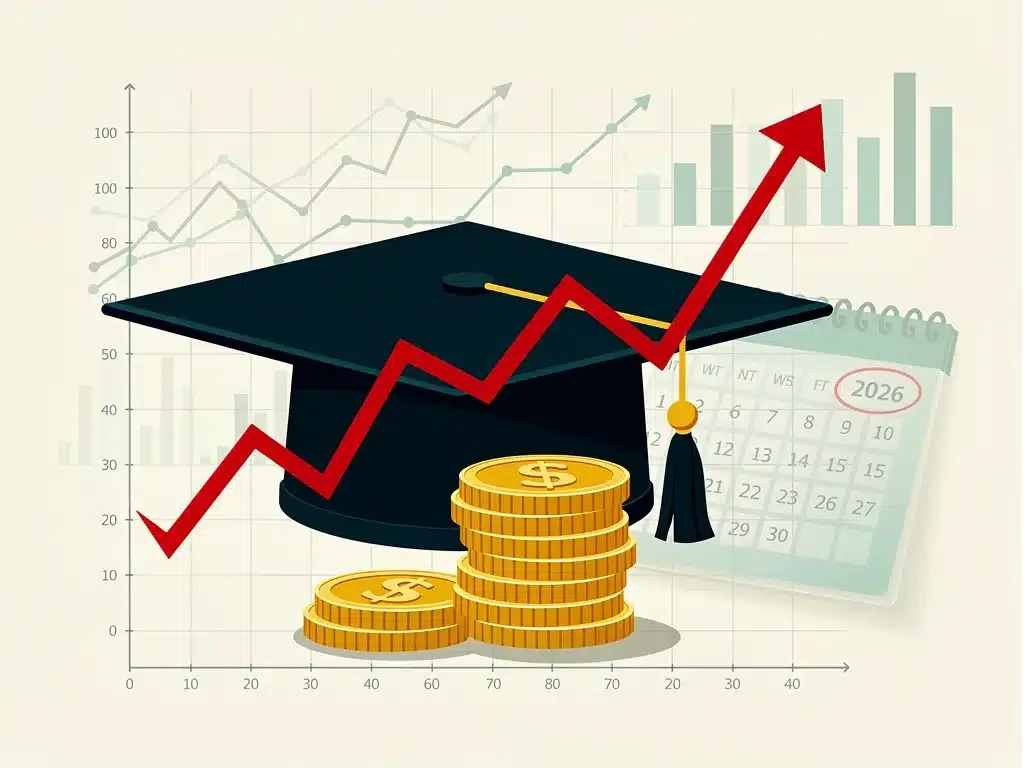
Understanding the 2026 Student Loan Rates is essential for students and families planning their academic budgets for the upcoming school year. Fixed federal borrowing costs have adjusted slightly upward, setting undergraduate direct loans at 6.52% and graduate direct unsubsidized options at 8.07%.
These annual rate recalibrations reflect shifting 10-Year Treasury yields and broader macroeconomic monetary policy. While existing fixed-rate balances remain unaffected, incoming students and parents considering PLUS loans will face elevated interest charges over the life of their debt.
Whether you are applying for federal financial aid or weighing private refinancing opportunities, understanding these yield shifts helps minimize long-term repayment costs. Read on for a breakdown of current interest benchmarks and proactive strategies for managing education debt.
Navigating the 2026 Student Loan Rates Landscape
The financial landscape for student loan borrowers is continually evolving, with significant attention now turning towards the projected 2026 Student Loan Rates.
Understanding these future rates is essential for current and prospective students, as well as those currently managing their loan repayments.
Economic forecasts and policy discussions are underway, aiming to provide clarity on what borrowers can expect. These projections are not merely academic; they directly influence long-term financial planning and repayment strategies for millions across the United States.
Staying informed about the 2026 Student Loan Rates empowers individuals to make proactive decisions, minimizing potential financial strain and optimizing their educational investments. The impact of these rates extends beyond monthly payments, influencing overall financial health.
Key Economic Factors Influencing Future Rates
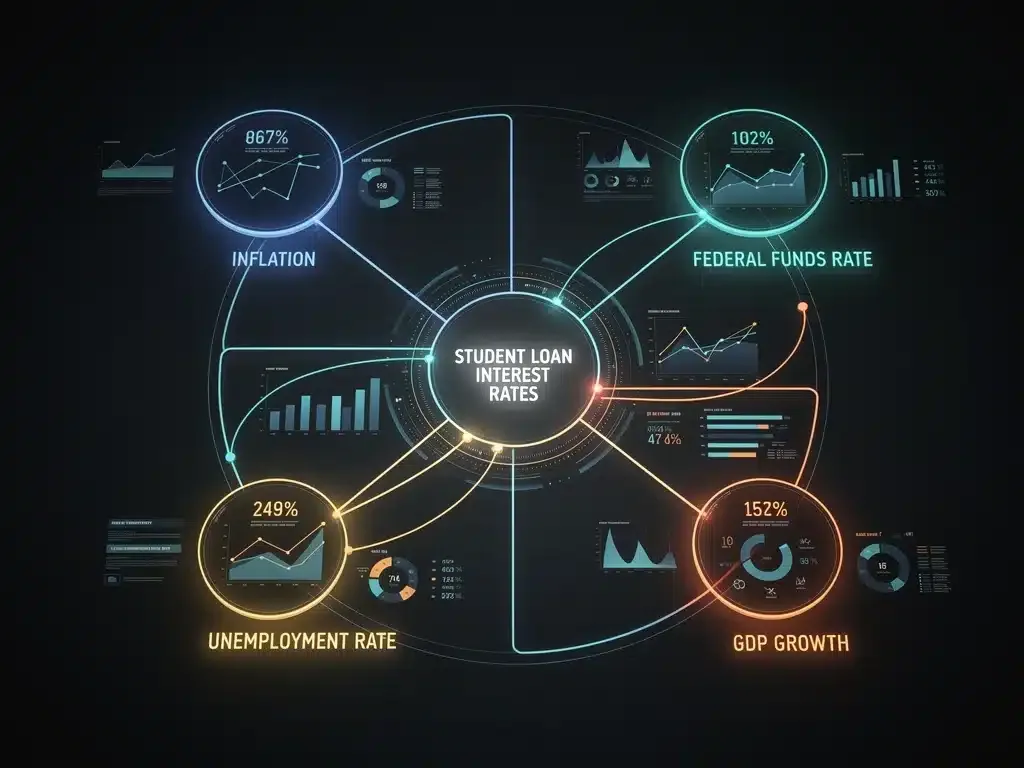
Several critical economic indicators and governmental policies heavily influence the trajectory of 2026 Student Loan Rates.
The Federal Reserve‘s monetary policy, particularly the federal funds rate, plays a pivotal role in setting the benchmark for interest rates across various financial products, including student loans.
Inflation rates also exert considerable pressure on lending costs; as inflation rises, lenders often increase rates to maintain profitability and purchasing power.
Furthermore, the overall health of the U.S. economy, including employment figures and GDP growth, impacts consumer confidence and the demand for loans.
Government legislative actions and regulatory changes concerning student aid programs can also significantly alter the rate environment.
Any shifts in federal loan programs, such as changes to direct loan subsidies or caps, will directly affect the 2026 Student Loan Rates for new and existing borrowers.
The Federal Funds Rate and Its Ripple Effect
The Federal Reserve’s target for the federal funds rate is a cornerstone in determining interest rates for various loans, including student loans. When the Fed raises this rate, it typically leads to higher borrowing costs across the economy.
Conversely, a reduction in the federal funds rate can signal lower interest rates, offering some relief to borrowers. Monitoring the Fed’s stance on inflation and economic growth provides crucial insights into potential shifts in 2026 Student Loan Rates.
Inflationary Pressures and Lending Costs
Persistent inflation erodes the purchasing power of money, prompting lenders to adjust interest rates upward to compensate for this devaluation. Higher inflation means higher operational costs for lenders and a greater incentive to charge more for borrowed capital.
Borrowers need to consider how sustained inflationary periods might translate into increased interest accrual on their student loans. The interplay between inflation and monetary policy will be a significant determinant of 2026 Student Loan Rates.
Taxation policies and broader fiscal strategies implemented by the government also indirectly influence the lending environment. These elements can affect the overall cost of capital for financial institutions, which then trickles down to consumer loan products.
Global economic trends, while sometimes less direct, can also contribute to the economic climate that shapes domestic interest rates. International market stability and geopolitical events can impact investor confidence and capital flows, subtly influencing national lending conditions for 2026 Student Loan Rates.
Analyzing Forecasts and Expert Predictions for 2026
Financial analysts and economic institutions are already releasing their projections for 2026 Student Loan Rates, offering a glimpse into what borrowers might encounter.
These forecasts are based on complex models that consider current economic data, historical trends, and anticipated policy shifts.
Leading financial publications and government agencies often provide detailed outlooks, which can serve as valuable resources for borrowers. While predictions are subject to change, they offer a foundational understanding of potential scenarios and their implications.
It is important to consult multiple reputable sources to gain a comprehensive perspective on the range of possible outcomes for 2026 Student Loan Rates. Divergent forecasts highlight the inherent uncertainties in economic projections but also provide a broader context for planning.
Consensus Among Economists
Many economists anticipate a period of continued economic stabilization, potentially leading to moderate adjustments in interest rates. The general consensus suggests that while dramatic spikes are unlikely, a gradual upward trend for 2026 Student Loan Rates is a possibility.
This outlook is often tied to expectations of the Federal Reserve maintaining a vigilant stance against inflation, which could necessitate further rate hikes. Such an environment would mean higher borrowing costs for both new and refinanced student loans.
Potential Legislative Impact
Beyond economic forces, legislative developments could significantly reshape the landscape of student loan interest rates. Discussions around federal student loan programs, including potential reforms or new initiatives, are ongoing.
Any bills passed by Congress that modify the structure of federal student loans could directly impact how interest rates are calculated and applied. Borrowers should stay abreast of these legislative debates as they unfold, given their potential influence on 2026 Student Loan Rates.
The political climate, especially leading up to and following major elections, can also introduce an element of unpredictability into financial forecasts. Changes in administration or congressional control may lead to different priorities regarding student debt policy.
Furthermore, the performance of the global economy, including trade relations and international financial stability, can indirectly influence domestic interest rates.
A robust global economy might support stable rates, while instability could lead to protective rate adjustments, affecting 2026 Student Loan Rates.
Understanding the Financial Impact on Borrowers
The projected 2026 Student Loan Rates will have a tangible financial impact on borrowers, affecting their monthly payments, total repayment amounts, and overall financial flexibility. Higher rates translate directly to increased costs over the life of a loan.
For new borrowers, understanding these rates is crucial when deciding on loan amounts and types. For existing borrowers, rate changes can influence decisions about refinancing, consolidation, or adjusting repayment plans to mitigate financial strain.
The cumulative effect of even small rate increases can amount to thousands of dollars over a decade or more. Therefore, a clear understanding of the 2026 Student Loan Rates is paramount for effective personal financial management.
Monthly Payment Adjustments
One of the most immediate impacts of changing interest rates is on monthly loan payments. Federal student loan interest rates are typically fixed for the life of the loan once disbursed, but future rates for new loans or refinanced loans will directly affect new borrowers.
For those with private student loans, which often feature variable rates, changes in the benchmark rates can lead to fluctuations in monthly payments. This variability requires careful budgeting and contingency planning to manage potential increases.
Total Cost of Education
Higher 2026 Student Loan Rates will inevitably increase the total cost of obtaining an education. This includes not only the principal borrowed but also the significant amount paid in interest over time.
Prospective students must factor these potential higher costs into their college funding calculations. Understanding the long-term financial commitment is essential for making informed decisions about higher education and avoiding excessive debt burdens.
The burden of student loan debt can also impact other life milestones, such as purchasing a home, starting a family, or saving for retirement. High monthly payments can restrict discretionary income, delaying or preventing these important financial goals.
Moreover, the psychological stress associated with substantial debt can be considerable. Proactively addressing potential changes in 2026 Student Loan Rates can alleviate some of this pressure by allowing borrowers to plan and adjust their financial strategies accordingly.
Strategies for Managing Student Loan Debt in 2026
Given the potential shifts in 2026 Student Loan Rates, borrowers should consider various strategies to effectively manage their debt. Proactive planning can help mitigate adverse effects and even leverage favorable conditions.
Exploring different repayment plans, understanding refinancing options, and considering loan consolidation are all viable approaches. Each strategy comes with its own set of benefits and drawbacks, requiring careful evaluation based on individual financial circumstances.
Financial literacy and continuous monitoring of economic indicators are key components of a robust debt management plan. Being informed allows borrowers to adapt quickly to changes in the 2026 Student Loan Rates environment.
Exploring Repayment Plans
Federal student loan borrowers have access to various income-driven repayment (IDR) plans that can adjust monthly payments based on income and family size. These plans can provide a safety net if rates increase or income fluctuates.
Understanding the eligibility requirements and long-term implications of IDR plans is crucial. While they can lower monthly payments, they may also extend the repayment period and increase the total interest paid, especially with higher 2026 Student Loan Rates.
Refinancing and Consolidation Options
Refinancing student loans, particularly private loans, can be an effective way to secure a lower interest rate, especially if credit scores have improved since the initial loan origination.
However, refinancing federal loans with a private lender means losing access to federal benefits like IDR plans and deferment options.
Loan consolidation, specifically federal loan consolidation, combines multiple federal loans into one with a new fixed interest rate, which is the weighted average of the original loans.
This simplifies payments but typically does not lower the interest rate, though it can open doors to certain IDR plans.
Another critical strategy involves making extra payments whenever possible, especially towards loans with the highest interest rates.
Even small additional payments can significantly reduce the principal and the total interest paid over time, especially relevant with projected 2026 Student Loan Rates.
Additionally, exploring employer-sponsored student loan benefits or state-specific assistance programs can provide unexpected relief. Many companies now offer student loan repayment assistance as part of their benefits packages, which can be a valuable resource.
Government Policy and Future Outlook
Government policy plays an undeniable role in shaping the future of 2026 Student Loan Rates and the broader student loan landscape. The Biden administration has already implemented significant changes, and further policy shifts are always a possibility.
Discussions around student loan forgiveness, income-driven repayment plan reforms, and changes to federal loan origination fees could all impact borrowers. These policy debates reflect a broader national conversation about the affordability of higher education.
Borrowers should pay close attention to announcements from the Department of Education and legislative bodies for updates that could directly affect their financial obligations.
These policy decisions can create new opportunities or challenges for managing debt in the context of 2026 Student Loan Rates.
Potential for New Legislation
The legislative agenda often includes proposals aimed at addressing the rising cost of college and the burden of student debt. New bills could introduce different mechanisms for calculating interest rates or provide additional avenues for financial relief.
Tracking these legislative developments is vital for understanding the potential direction of student loan policy. Any significant new laws could fundamentally alter the environment for 2026 Student Loan Rates and beyond.
Regulatory Changes and Impact
Beyond new laws, regulatory bodies can issue new rules and guidelines that affect student loan servicing, collection practices, and borrower protections. These regulatory changes, while not always as high-profile as legislative actions, can have a profound impact on borrowers’ experiences.
The Department of Education, for example, frequently updates its regulations regarding eligibility for federal programs and specific repayment plan terms.
Staying informed about these changes is crucial for navigating the student loan system effectively, especially with an eye on 2026 Student Loan Rates.
The ongoing debate surrounding the Higher Education Act reauthorization also holds significant weight. This comprehensive legislation is periodically updated and can introduce sweeping changes to federal student aid programs, affecting loan terms and interest rates.
Public advocacy groups and non-profit organizations often play a crucial role in influencing these policy discussions. Their research and lobbying efforts can bring important issues to the forefront, potentially shaping future government actions regarding 2026 Student Loan Rates.
Private vs. Federal Loans: Rate Divergences
The distinction between private and federal student loans is particularly important when discussing 2026 Student Loan Rates. Federal loan rates are set by Congress and are typically fixed for the life of the loan, offering a degree of predictability.
Private loan rates, on the other hand, are determined by individual lenders and are often tied to broader market rates like the prime rate or LIBOR (though LIBOR is being phased out and replaced by SOFR). This makes private loan rates more susceptible to market fluctuations.
Borrowers holding a mix of both federal and private loans need to understand these fundamental differences to effectively manage their debt. The strategies for addressing potential changes in 2026 Student Loan Rates will vary significantly between these loan types.
Federal Loan Rate Setting
Federal student loan interest rates are typically determined annually, based on the results of the 10-year Treasury note auction held each spring. Once set for a given academic year, these rates are fixed for the life of the loan.
While the rates for new federal loans can change each year, existing federal loans maintain their original fixed rates. This provides stability for federal borrowers, making the discussion around 2026 Student Loan Rates primarily relevant for new disbursements.
Private Loan Market Dynamics
Private student loan rates are much more dynamic and are influenced by a wider array of factors, including the borrower’s creditworthiness, the lender’s risk assessment, and prevailing market conditions. They can be either fixed or variable.
Variable-rate private loans are particularly sensitive to changes in benchmark rates, meaning monthly payments could increase if market interest rates rise.
This makes understanding the general economic outlook and the 2026 Student Loan Rates forecast especially critical for private loan holders.
The competitive nature of the private lending market can also lead to variations in rates offered by different institutions.
Shopping around and comparing offers from multiple private lenders is always advisable for those considering new private loans or refinancing, especially with an eye on 2026 Student Loan Rates.
Furthermore, private lenders may offer different repayment terms and borrower protections compared to federal loans. Carefully reviewing these terms and understanding the implications of choosing a private loan is essential for long-term financial planning.

Preparing for Future Rate Changes
Proactive preparation is the best defense against unforeseen impacts from changes in 2026 Student Loan Rates. This involves not only understanding the forecasts but also building a resilient financial plan.
Regularly reviewing personal budgets, assessing emergency savings, and maintaining a strong credit score are fundamental steps. These actions provide a buffer against potential increases in loan payments or allow for better refinancing opportunities.
Engaging with financial advisors or student loan counselors can also provide personalized guidance tailored to individual circumstances. Their expertise can help borrowers navigate complex options and make informed decisions regarding 2026 Student Loan Rates.
Building a Financial Safety Net
Establishing and maintaining an emergency fund is crucial for any borrower. This fund can cover unexpected expenses or provide a cushion if monthly loan payments increase due to variable rates or other financial shifts, including those related to 2026 Student Loan Rates.
Aiming for at least three to six months’ worth of living expenses in savings can significantly reduce financial stress. This safety net ensures that borrowers are not caught off guard by economic fluctuations or personal financial setbacks.
Improving Creditworthiness
A strong credit score is invaluable when seeking favorable interest rates, particularly for private student loans or refinancing options. Paying bills on time, keeping credit utilization low, and regularly checking credit reports can help improve creditworthiness.
Lenders use credit scores to assess risk, so a higher score often translates to lower interest rates and more attractive loan terms. This becomes especially relevant if borrowers decide to refinance their loans in response to the 2026 Student Loan Rates environment.
Diversifying income streams or seeking opportunities for career advancement can also enhance financial stability. A higher income can make managing student loan payments easier, even if 2026 Student Loan Rates see an upward trend.
Additionally, understanding the terms and conditions of existing loan agreements is critical. Knowing the details of fixed versus variable rates, repayment schedules, and any available deferment or forbearance options empowers borrowers to make informed decisions when planning for the future.
Resources and Support for Borrowers
Borrowers are not alone in navigating the complexities of 2026 Student Loan Rates and student loan debt. Numerous resources and support systems are available to help individuals understand their options and manage their financial obligations effectively.
The Department of Education offers a wealth of information regarding federal student loans, including detailed explanations of repayment plans, eligibility criteria, and borrower rights. Their official website is a primary source for reliable information.
Non-profit organizations and financial counseling services also provide invaluable assistance, often at no cost.
These organizations can offer personalized advice, help with budget planning, and guide borrowers through the various repayment strategies available to them, especially concerning 2026 Student Loan Rates.
Official Government Resources
The Federal Student Aid (FSA) website, a division of the U.S. Department of Education, is the definitive resource for federal student loan information. It provides tools for managing loans, understanding repayment options, and accessing borrower benefits.
Regularly checking the FSA website for updates on policy changes, new programs, or adjustments to interest rate calculations is highly recommended. This ensures borrowers have the most current and accurate information regarding their federal loans and the 2026 Student Loan Rates.
Financial Counseling and Non-profit Aid
Organizations like the National Foundation for Credit Counseling (NFCC) offer certified credit and debt counseling services. These services can be instrumental in helping borrowers develop personalized repayment strategies and improve their overall financial health.
Many universities also provide financial aid counseling services to their alumni, extending support beyond graduation. These resources can help borrowers understand how to best prepare for potential changes in 2026 Student Loan Rates and manage their debt responsibly.
Online forums and communities dedicated to student loan debt can also offer peer support and shared experiences. While not a substitute for professional advice, these platforms can provide valuable insights and a sense of community for borrowers facing similar challenges.
Utilizing financial planning software and budgeting apps can help borrowers track their spending, manage their income, and project future loan payments.
These digital tools empower individuals to take control of their finances and prepare for potential shifts in 2026 Student Loan Rates effectively.
| Key Point | Brief Description |
|---|---|
| Economic Influences | Federal Reserve policy and inflation are primary drivers of 2026 Student Loan Rates. |
| Borrower Impact | Higher rates mean increased monthly payments and total cost of education. |
| Management Strategies | Explore IDR plans, refinancing, and consolidation to manage debt. |
| Policy & Resources | Government actions and available support are crucial for informed decisions. |
Frequently Asked Questions About 2026 Student Loan Rates
What factors primarily influence 2026 Student Loan Rates?▼The primary factors influencing 2026 Student Loan Rates include the Federal Reserve’s monetary policy, particularly the federal funds rate, and the prevailing inflation rate. Additionally, the overall economic health of the U.S. and any legislative changes to federal student aid programs play significant roles in rate determination.
How will higher interest rates affect my monthly payments?▼For new federal loans disbursed in 2026, higher interest rates will result in higher fixed monthly payments over the life of the loan. If you have private student loans with variable rates, your monthly payments could increase as market rates rise, directly impacting your budget and financial planning.
Are there ways to lower my student loan interest rate before 2026?▼Yes, borrowers can explore options like refinancing private student loans to potentially secure a lower fixed rate, especially if their credit score has improved. Federal loan consolidation can simplify payments but typically doesn’t lower the interest rate, though it may open access to certain income-driven repayment plans.
What role does government policy play in 2026 Student Loan Rates?▼Government policy, set by Congress, directly determines federal student loan interest rates annually. Future legislative actions, such as reforms to student aid programs or new forgiveness initiatives, could significantly alter the rate environment and repayment terms for borrowers in 2026 and beyond.
Where can I find reliable information on 2026 Student Loan Rates?▼Reliable information on 2026 Student Loan Rates can be found on the Federal Student Aid (FSA) website, a division of the U.S. Department of Education. Additionally, reputable financial news outlets, economic analysis firms, and non-profit financial counseling services provide valuable insights and guidance.
Looking Ahead: Preparing for the Future of Student Loans
The discussion surrounding 2026 Student Loan Rates underscores the dynamic nature of financial markets and government policy. Borrowers who remain informed and proactive in their financial planning will be best positioned to navigate these changes successfully.
Monitoring economic indicators, staying updated on legislative developments, and leveraging available resources are essential steps. These actions empower individuals to make strategic decisions that protect their financial well-being and manage their educational debt effectively.
Ultimately, understanding the potential trajectory of 2026 Student Loan Rates is not just about anticipating numbers; it is about building a resilient financial future in an ever-changing economic landscape.