Why 42% of US Retailers Are Moving Budgets Following the Latest 2026 Data Tracking Restrictions
Advertisements
Is your marketing team still relying on third-party cookie tracking to drive digital sales in a privacy-first landscape? As US Retailers Shift Ad Budgets following stringent 2026 data tracking restrictions across 20 state privacy laws, consumer brands are rapidly pulling dollars away from legacy programmatic networks.
With signal deprecation rendering traditional cross-site targeting unreliable, top merchants are reallocating capital toward retail media networks and authenticated zero-party channels. This strategic migration ensures media spend connects directly to closed-loop purchase data rather than unverified consumer profiling.
Navigating state-level data compliance requires brand leaders to prioritize transparent, permission-based audience engagement. Here is how major retail brands are restructuring their digital media allocation to protect customer acquisition returns.
Understanding the 2026 Data Tracking Restrictions
The impending 2026 data tracking restrictions are set to fundamentally alter how consumer data is collected and utilized for advertising purposes. These regulations, driven by growing privacy concerns, aim to give consumers more control over their personal information online.
This legislative push impacts everything from personalized ads to performance measurement, forcing a strategic re-evaluation across the entire advertising ecosystem. Retailers, in particular, are at the forefront of this transformation due to their heavy reliance on consumer data for targeted campaigns.
The shift is not merely a compliance exercise but a fundamental reorientation of marketing strategies, emphasizing alternative data acquisition methods and privacy-centric approaches. The long-term implications for brand-consumer relationships are profound.
The Genesis of Privacy-Centric Regulations
The movement towards stricter data privacy began several years ago, gaining momentum with landmark legislation like GDPR and CCPA. These early regulations set a precedent for consumer data rights, pushing companies to be more transparent and accountable.
The 2026 restrictions represent the next significant evolution, specifically targeting cross-site tracking and third-party cookies, which have been cornerstones of digital advertising. This regulatory environment reflects a broader societal demand for enhanced digital privacy.
This progression underscores a fundamental shift in the power dynamic between consumers and corporations, placing greater emphasis on individual data autonomy. Businesses must now innovate to deliver value without compromising privacy.
The Immediate Impact on US Retailers
A staggering 42% of US retailers are already moving advertising budgets in anticipation of the 2026 data tracking restrictions, according to recent industry reports. This proactive reallocation highlights the urgency and perceived severity of the upcoming changes.
Retailers are exploring new channels and technologies that are less reliant on granular individual data, focusing instead on contextual advertising, first-party data strategies, and enhanced direct consumer engagement. The traditional digital advertising playbook is being rewritten.
This significant budget movement indicates a widespread recognition that a 'wait and see' approach is not viable. The US Retailers Moving Budgets is already underway, demanding immediate action.
Why Retailers Are Shifting Budgets Now
The primary driver for early budget reallocation is the need to build resilient, future-proof marketing infrastructures. Waiting until 2026 would leave many retailers scrambling to adapt, potentially losing market share and customer engagement.
Furthermore, early adoption allows for experimentation and refinement of new strategies, providing a competitive edge as the industry navigates this uncharted territory. Learning curves are steep, and those who start early will be better positioned.
This strategic foresight ensures that retailers can maintain effective advertising reach and personalization, even as traditional data tracking methods become obsolete. The US Retailers Moving Budgets is a race against time.
Emerging Advertising Strategies and Channels
With diminished access to third-party data, retailers are increasingly turning to first-party data collection and activation. This involves directly gathering customer information through loyalty programs, website interactions, and direct surveys, then leveraging it responsibly.
Contextual advertising is also experiencing a resurgence, where ads are placed based on the content of the webpage rather than the user's browsing history. This method respects privacy while still offering relevant ad placements.
Additionally, investment in retail media networks, which leverage a retailer's own customer data for advertising within their ecosystem, is growing significantly. This represents a powerful new revenue stream and a privacy-compliant advertising channel. The US Retailers Moving Budgets is fostering innovation.
The Rise of First-Party Data
First-party data offers a direct and consented relationship with the consumer, providing valuable insights without privacy infringements. Retailers are enhancing their CRM systems and customer interaction points to maximize this asset.
Building robust first-party data strategies requires transparency and clear value propositions for consumers, encouraging them to share their information willingly. Trust becomes a critical currency in this new advertising paradigm.
This approach allows for highly personalized experiences and targeted communications, even in a privacy-first world. The US Retailers Moving Budgets empowers direct relationships.
Challenges and Opportunities for Retailers
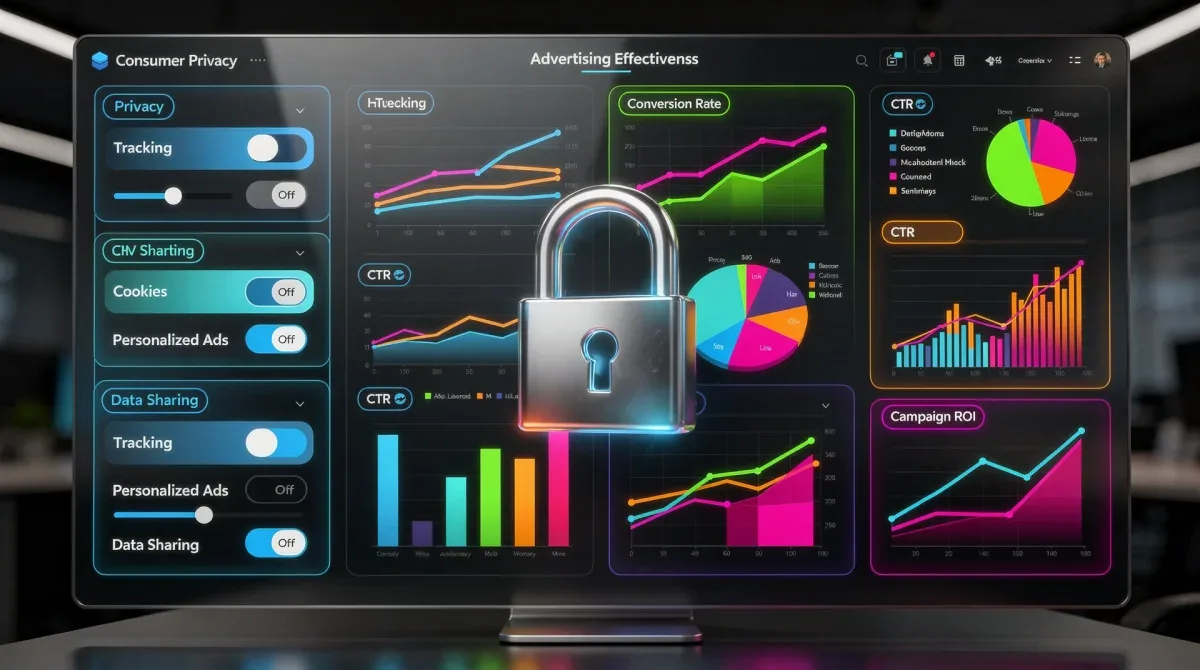
The transition presents significant challenges, including the need to re-skill marketing teams, invest in new technologies, and redesign measurement frameworks. Quantifying ROI without traditional tracking metrics demands innovative analytical approaches.
However, these challenges also unlock substantial opportunities. Retailers who successfully adapt can build deeper, more trusting relationships with their customers, fostering loyalty and differentiation in a crowded market.
The US Retailers Moving Budgets can lead to more creative and impactful advertising, moving beyond intrusive targeting to genuinely valuable consumer experiences.
Navigating Measurement and Attribution
One of the biggest hurdles is accurately measuring campaign effectiveness and attributing sales without precise individual tracking. New methodologies, such as aggregated data analysis, mixed-media modeling, and incrementality testing, are becoming essential.
Collaboration with advertising platforms and technology providers to develop privacy-preserving measurement solutions is also crucial. The industry is collectively working towards establishing new standards for success metrics.
This shift encourages a focus on broader business outcomes rather than just granular clicks and impressions. The US Retailers Moving Budgets demands a holistic view of marketing performance.
Technology and Platform Adaptations
Advertising technology providers are rapidly developing new tools and platforms designed to operate within the constraints of the 2026 restrictions. These innovations focus on privacy-enhancing technologies like differential privacy and federated learning.
Major advertising platforms are also rolling out new APIs and frameworks that enable advertisers to reach audiences and measure results without relying on individual user identifiers. These changes require significant integration efforts from retailers.
The technological landscape is evolving quickly, and staying informed about the latest solutions is critical for retailers to maintain their competitive edge. The US Retailers Moving Budgets is a catalyst for tech innovation.
The Role of Privacy-Enhancing Technologies
Privacy-enhancing technologies (PETs) are at the forefront of this adaptation, allowing data insights to be gleaned without exposing individual user information. These technologies are crucial for balancing personalization with privacy.
Examples include secure multi-party computation and homomorphic encryption, which enable data analysis while keeping the underlying data encrypted. These advanced solutions are becoming more accessible to advertisers.
Investing in and understanding these technologies is paramount for retailers looking to maintain sophisticated advertising capabilities post-2026. The US Retailers Moving Budgets is pushing the boundaries of what's possible in ad tech.
The Consumer Perspective and Brand Trust
For consumers, the 2026 data tracking restrictions represent a victory for privacy and control. Brands that embrace these changes and communicate their commitment to privacy transparently are likely to build stronger consumer trust and loyalty.
Conversely, retailers perceived as circumventing privacy regulations or being opaque about data practices risk alienating their customer base. Trust is increasingly becoming a key differentiator in purchasing decisions.
The US Retailers Moving Budgets offers an opportunity for brands to redefine their value proposition around ethical data handling and consumer respect.
Building a Privacy-First Brand Image
Proactively communicating privacy policies in clear, accessible language can significantly enhance a brand's reputation. Demonstrating a genuine commitment to consumer data protection fosters goodwill and reinforces ethical practices.
Offering consumers granular control over their data preferences, beyond mere compliance, can also differentiate a brand. Empowering users builds trust and creates a more positive brand perception.
This strategic approach transforms privacy from a regulatory burden into a competitive advantage. The US Retailers Moving Budgets is an opportunity for brand reinvention.
Future Outlook: Beyond 2026
The 2026 data tracking restrictions are not an endpoint but rather a significant milestone in an ongoing evolution of digital privacy. Future regulations are likely to further refine how data is handled, demanding continuous adaptation from retailers.
The industry is moving towards a more consent-driven and privacy-conscious advertising ecosystem. This trajectory suggests a future where advertising is more about value exchange and less about intrusive targeting.
Retailers must view this US Retailers Moving Budgets as an impetus for continuous innovation and ethical engagement with their customer base.
Long-Term Strategic Imperatives
Long-term success will hinge on a retailer's ability to innovate in data collection, leverage first-party relationships effectively, and embrace privacy-enhancing technologies. Agility and foresight will be paramount.
Investing in robust data governance and internal expertise in privacy compliance will also be critical. This ensures that marketing strategies are not only effective but also legally sound and ethically responsible.
The US Retailers Moving Budgets will shape the competitive landscape for years to come, rewarding those who prioritize innovation and consumer trust.
Key Point | Brief Description |
|---|---|
Budget Reallocation | 42% of US retailers are moving ad budgets ahead of 2026 restrictions. |
Data Privacy Focus | Regulations target third-party cookies and cross-site tracking. |
New Strategies | Emphasis on first-party data, contextual ads, and retail media networks. |
Consumer Trust | Ethical data handling becomes a key brand differentiator. |
Frequently Asked Questions About the Advertising Shift
What exactly are the 2026 data tracking restrictions?▼
The 2026 data tracking restrictions are forthcoming regulations aimed at limiting how companies collect and use consumer data, particularly by phasing out third-party cookies and restricting cross-site tracking. These measures are designed to enhance user privacy and give individuals greater control over their digital footprint.
Why are 42% of US retailers moving their ad budgets now?▼
Retailers are proactively reallocating budgets to adapt to the 2026 data tracking restrictions and develop new, privacy-compliant advertising strategies. This early move allows them to experiment with first-party data, contextual advertising, and retail media networks, ensuring continued effective reach and competitive advantage.
What new advertising strategies are emerging?▼
New strategies include a strong focus on first-party data collection through direct consumer interactions, the resurgence of contextual advertising, and significant investment in retail media networks. These approaches aim to deliver personalized experiences and effective campaigns without relying on intrusive third-party tracking.
How will this affect consumer privacy and trust?▼
The restrictions are expected to significantly enhance consumer privacy by giving individuals more control over their data. Retailers who transparently embrace these changes and prioritize ethical data handling will likely build greater trust and loyalty, turning privacy into a key brand differentiator and competitive advantage.
What challenges do retailers face with these changes?▼
Retailers face challenges such as redesigning measurement frameworks without traditional tracking, re-skilling marketing teams, and investing in new privacy-enhancing technologies. Adapting requires significant strategic adjustments, but also presents opportunities for deeper customer relationships and innovative marketing approaches.
Looking Ahead: The Evolving Advertising Landscape
The US Retailers Moving Budgets signals a profound and irreversible change in the digital advertising realm. This isn't merely a temporary adjustment but a foundational re-evaluation of how brands connect with consumers in an increasingly privacy-conscious world.
Retailers must continue to innovate, prioritize ethical data practices, and foster direct relationships to thrive. The future of advertising is being shaped now, demanding vigilance and adaptability from all stakeholders.