Navigating Paid Family Leave Allowances: 12 Weeks 80% Wage
Advertisements
Navigating modern benefit programs can feel overwhelming, but securing your Paid Family Leave Allowances is vital for your financial security during major life events. New guidelines now make it easier for qualified workers to maintain income stability while taking necessary time away from work.
Under updated workforce policies, eligible employees can claim up to 12 weeks of partial earnings substitution at an 80% rate. This substantial wage continuity allows caregivers and new parents to focus on family needs without facing severe economic hardship.
Understanding how to access these government-backed compensation funds is key to maximizing your entitled coverage. Here is a step-by-step breakdown of how to apply, meet filing criteria, and secure your parental or caregiving benefits seamlessly.
Understanding Paid Family Leave Allowances
Paid Family Leave (PFL) programs provide crucial financial support to workers who need to take time off for specific family and medical reasons. These allowances ensure that individuals can attend to critical personal or family needs without facing severe financial hardship, offering a vital safety net.
The concept of PFL has gained significant traction across the United States, reflecting a growing recognition of the importance of work-life balance and family support. It allows employees to care for a new child, a seriously ill family member, or their own serious health condition.
Currently, several states and jurisdictions have implemented their own PFL programs, each with unique eligibility requirements, benefit amounts, and duration. This patchwork of policies underscores the complexity of Navigating Paid Family Leave Allowances.
Eligibility Criteria for 80% Wage Replacement
To qualify for up to 80% wage replacement, employees typically need to meet specific criteria, which often vary by state. These usually include a minimum period of employment, a certain amount of earnings within a base period, and a qualifying reason for leave.
Common qualifying reasons encompass bonding with a new child (birth, adoption, or foster care), caring for a family member with a serious health condition, or addressing one's own serious health issue. Documentation, such as medical certifications or birth certificates, is generally required to substantiate the claim.
Understanding these eligibility requirements is the first critical step in successfully accessing Paid Family Leave Allowances. Workers must proactively review their state’s specific guidelines to ensure they meet all necessary conditions before applying.
State-Specific Requirements and Variations
Each state offering Paid Family Leave Allowances has tailored its program to suit its local economic and demographic landscape. This means what qualifies in one state might differ significantly in another, particularly concerning the 80% wage replacement threshold.
For instance, some states might cap the weekly benefit amount, even if 80% of a high earner's wages would exceed that cap. Others may have a tiered system where lower-income workers receive a higher percentage of their wages, while higher earners receive a lower percentage, often up to a maximum weekly benefit.
Therefore, a thorough understanding of state-specific regulations is paramount when Navigating Paid Family Leave Allowances. It is advisable to consult official state labor department websites for the most accurate and up-to-date information.
Common Pitfalls to Avoid in Applications
Applying for Paid Family Leave Allowances can be a straightforward process, but certain missteps can lead to delays or even denials. Incomplete forms, missing documentation, or failing to meet deadlines are common issues that applicants face.
One frequent pitfall is misunderstanding the definition of a "serious health condition" or what constitutes a "family member" under state law. These definitions are often precise and require specific medical or legal documentation to support the claim.
Ensure all sections of the application form are completed accurately.
Gather all required supporting documents well in advance of submission.
Pay close attention to application deadlines and notification requirements.
Verify the definition of eligible family members and health conditions for your state.
The Application Process: Step-by-Step Guide
Once eligibility is confirmed, the next crucial phase involves the actual application for Paid Family Leave Allowances. This process typically begins with notifying your employer, followed by submitting a formal application to the relevant state agency.
The application generally requires personal information, details about your employment, and specific information regarding the reason for your leave. Supporting documents, such as medical certifications or birth certificates, are integral to a successful submission.
Adhering to strict timelines and providing accurate information are critical to ensure a smooth and timely approval of your Paid Family Leave Allowances. Any discrepancies or delays can significantly impact the receipt of benefits.

Notifying Your Employer and State Agency
The first step in securing Paid Family Leave Allowances is to inform your employer about your intention to take leave. Most state laws require employees to provide advance notice, typically 30 days, whenever possible, to allow employers to plan for your absence.
Following employer notification, you will need to apply directly to the state agency responsible for administering PFL benefits. This usually involves completing an online application or mailing a physical form, along with all necessary supporting documentation.
It is important to understand the distinct roles of your employer and the state agency. While your employer may have internal policies regarding leave, the state agency is responsible for determining your eligibility for the financial benefits of Paid Family Leave Allowances.
Required Documentation and Timelines
The documentation required for Paid Family Leave Allowances can vary but generally includes proof of identity, wage information, and specific forms related to the reason for leave. For example, a doctor's certification is needed for a serious health condition, and a birth certificate for new parents.
Timelines are critically important. Applications must typically be submitted within a certain number of days or weeks after the leave begins. Missing these deadlines can jeopardize your ability to receive benefits, highlighting the need for prompt action.
Maintaining organized records of all submitted documents and communications with both your employer and the state agency is highly recommended. This practice can prove invaluable if any questions or issues arise during the process of Navigating Paid Family Leave Allowances.
Securing Up to 12 Weeks of Leave
The promise of up to 12 weeks of paid leave is a cornerstone of many Paid Family Leave Allowances programs. This duration provides significant time for recovery, bonding, or caregiving, offering substantial relief to families across the nation.
While 12 weeks is a common maximum, some states may offer slightly more or less, or structure the leave in a way that allows for intermittent use. Understanding these nuances is key to maximizing the benefits available under state law.
The ability to take an extended period of paid leave without fear of losing employment or significant income is a major advantage of robust Paid Family Leave Allowances. It directly supports family well-being and economic stability.
Intermittent Leave and Its Implications
Many Paid Family Leave Allowances programs allow for intermittent leave, meaning you can take time off in smaller blocks rather than a continuous period. This flexibility is particularly beneficial for ongoing care needs or managing a chronic health condition.
However, intermittent leave often comes with specific reporting requirements and coordination with your employer. You may need to provide advance notice for each intermittent absence and track your leave usage carefully to remain within the maximum allowed duration.
The implications of intermittent leave extend to how your 12 weeks are calculated. It is crucial to understand whether intermittent days or hours contribute to your overall 12-week allowance, ensuring you do not inadvertently exhaust your benefits while Navigating Paid Family Leave Allowances.
Combining State and Federal Leave Options
In some cases, employees may be eligible for both state-level Paid Family Leave Allowances and federal protections under the Family and Medical Leave Act (FMLA). FMLA provides job protection for up to 12 weeks of unpaid leave for qualifying reasons.
When both state PFL and FMLA apply, the leaves often run concurrently. This means that while FMLA ensures your job is protected, state PFL provides the wage replacement component, creating a more comprehensive support system for workers.
Understand if your state PFL runs concurrently with FMLA.
Consult your HR department or state labor agency for guidance on combining benefits.
Be aware of any differences in eligibility or documentation between federal and state laws.
Leverage both programs to maximize job protection and wage replacement during your leave.
Maximizing Your 80% Wage Replacement
Achieving the maximum 80% wage replacement often depends on various factors, including your earnings, the state's benefit cap, and how you structure your leave. Strategic planning can significantly impact the financial benefits you receive.
Some states use a sliding scale, where lower-income workers receive a higher percentage of their wages, while higher earners might hit a weekly benefit cap. Understanding these calculations is vital to accurately estimate your potential wage replacement.
Furthermore, coordinating with any employer-provided benefits, such as short-term disability or supplemental paid leave, can help bridge any gaps or even exceed the 80% threshold. This integrated approach is key to Navigating Paid Family Leave Allowances effectively.
Calculating Your Potential Benefits
To calculate your potential Paid Family Leave Allowances, you will typically need to know your average weekly wage during a specific base period, as defined by your state. Most states then apply a percentage (e.g., 60-90%) to this average, up to a maximum weekly benefit amount.
It is crucial to use the official state calculators or consult their guidelines, as interpretations can vary. Some states might exclude certain types of income or use different base periods for calculation, impacting the final benefit amount.
A precise calculation helps in financial planning during your leave. Understanding how your state determines benefits for Paid Family Leave Allowances ensures you are prepared for the financial realities of your time off.
Employer Contributions and Supplemental Pay
While state Paid Family Leave Allowances provide a baseline of wage replacement, some employers offer supplemental pay to bridge the gap between the state benefit and an employee's full salary. This can significantly enhance the financial security during leave.
These employer-provided benefits are not universal and depend on company policy. It is essential to inquire with your human resources department about any available supplemental leave programs, short-term disability, or paid time off (PTO) that can be used in conjunction with state PFL.
Understanding the interplay between state benefits and employer contributions is a critical aspect of Navigating Paid Family Leave Allowances. It can help you achieve a higher overall wage replacement percentage.
National Landscape of PFL Programs
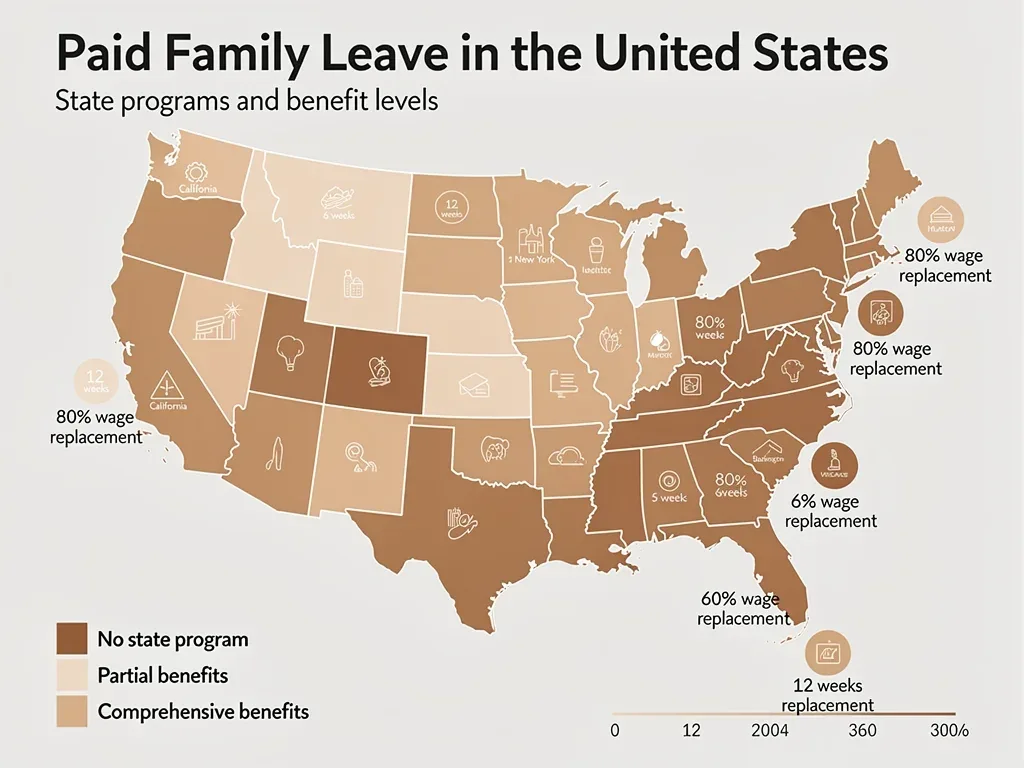
The landscape of Paid Family Leave Allowances across the United States is dynamic and constantly evolving. While a federal mandate for paid family leave does not currently exist, a growing number of states have implemented their own comprehensive programs.
This creates a complex mosaic of benefits, where access and generosity can vary significantly depending on where you live and work. Understanding this national overview is crucial for workers and employers alike, especially those operating across state lines.
Advocacy for a federal Paid Family Leave program continues, but for now, the focus remains on state-level initiatives and the continuous effort to expand access and improve benefits, including securing up to 12 weeks of 80% wage replacement nationwide.
States Leading the Way in Benefits
Several states have emerged as leaders in providing robust Paid Family Leave Allowances, offering generous wage replacement rates and extended leave durations. These states often serve as models for others considering similar legislation.
California, New Jersey, New York, Rhode Island, Washington, Massachusetts, Connecticut, Oregon, Colorado, and the District of Columbia are among those with established PFL programs. Each program has unique features, but they generally aim to provide significant financial support during critical life events.
Studying these leading states can offer valuable insights into best practices and potential future trends in Navigating Paid Family Leave Allowances. Their successes and challenges inform national discussions.
Future Outlook and Federal Initiatives
The discussion around a national Paid Family Leave program continues to be a prominent topic in federal legislative debates. While progress has been slow, the increasing number of state programs highlights a growing consensus on the need for such benefits.
Future federal initiatives could aim to establish minimum standards for paid leave, provide funding to states, or even implement a universal program. The goal remains to ensure all American workers have access to comprehensive Paid Family Leave Allowances, regardless of their state of residence.
Monitor legislative proposals at both federal and state levels.
Stay informed about advocacy efforts for expanded paid leave.
Understand how potential federal changes could impact existing state programs.
Recognize the ongoing shift towards more supportive family leave policies nationwide.
Employer Responsibilities and Compliance
Employers play a critical role in the successful implementation of Paid Family Leave Allowances. Their responsibilities typically include informing employees about their rights, collecting and remitting contributions (where applicable), and processing leave requests in compliance with state laws.
Compliance with PFL regulations is not merely a legal obligation but also an opportunity for employers to demonstrate their commitment to employee well-being and retention. A supportive leave policy can significantly boost morale and productivity.
Failing to comply with state PFL laws can result in penalties, fines, and legal action. Therefore, employers must stay updated on the latest requirements for Navigating Paid Family Leave Allowances.
Legal Obligations for Businesses
Businesses operating in states with Paid Family Leave Allowances have specific legal obligations they must adhere to. These often include posting notices about PFL rights, providing written information to new hires, and maintaining accurate records of employee contributions and leave usage.
Employers are also generally prohibited from retaliating against employees who request or take PFL. This protection ensures that workers can utilize their benefits without fear of negative employment consequences, reinforcing the purpose of Paid Family Leave Allowances.
Understanding these legal obligations is essential for all businesses, regardless of size. Consulting with legal counsel or state labor departments can help ensure full compliance and avoid potential legal issues related to PFL.
Best Practices for Supporting Employees
Beyond legal compliance, employers can adopt best practices to create a truly supportive environment for employees utilizing Paid Family Leave Allowances. This includes clear communication, streamlined application processes, and fostering a culture that values work-life integration.
Offering additional employer-sponsored benefits, such as supplemental pay or assistance with navigating the application process, can further enhance employee support. These initiatives demonstrate a commitment to employee well-being that goes beyond minimum legal requirements.
By actively supporting employees in Navigating Paid Family Leave Allowances, businesses can improve employee satisfaction, reduce turnover, and enhance their reputation as a family-friendly workplace.
Key Point | Brief Description |
|---|---|
Eligibility Varies | State laws dictate who qualifies for Paid Family Leave Allowances and for what reasons. |
Wage Replacement | Benefits can reach 80% of wages, often with a weekly maximum, depending on state policy. |
Leave Duration | Many programs offer up to 12 weeks of paid leave for qualifying family or medical needs. |
Application Process | Requires employer notification and submission to state agencies with proper documentation and adherence to timelines. |
Frequently Asked Questions About Paid Family Leave
What exactly are Paid Family Leave Allowances?▼
Paid Family Leave Allowances are state-mandated programs providing financial benefits to workers who need to take time off for specific family or medical reasons. These can include bonding with a new child, caring for a seriously ill family member, or managing one's own serious health condition, offering partial wage replacement during absence.
How can I qualify for 80% wage replacement?▼
Qualification for 80% wage replacement depends on your state's specific PFL laws, often requiring a minimum earning history and a qualifying reason for leave. Some states offer a higher percentage for lower-income workers, while others cap the maximum weekly benefit, impacting the actual percentage for higher earners.
Is 12 weeks of paid leave guaranteed nationwide?▼
No, 12 weeks of paid leave is not guaranteed nationwide. While several states offer up to 12 weeks through their Paid Family Leave Allowances programs, there is currently no federal mandate for paid family leave. The duration and benefit levels vary significantly by state.
What documents do I need to apply for PFL?▼
Typically, you will need proof of identity, wage information, and documentation specific to your reason for leave. This could include a medical certificate for a serious health condition, a birth certificate for a new child, or adoption papers. Always check your state's specific requirements.
Can I combine state PFL with federal FMLA?▼
Yes, in many cases, state Paid Family Leave Allowances can run concurrently with the federal Family and Medical Leave Act (FMLA). FMLA provides job protection, while state PFL offers wage replacement. This combination can provide comprehensive support, but specific rules vary by state and employer policy.
Looking Ahead: The Evolution of Family Leave
The continued expansion and refinement of Paid Family Leave Allowances signal a fundamental shift in how the nation views work, family, and employee support.
The push for broader access and more generous benefits, particularly aiming for 12 weeks of 80% wage replacement nationwide, underscores a growing recognition of these policies' societal and economic value.
Policymakers, employers, and advocacy groups are actively engaged in discussions to harmonize and strengthen these vital programs. The evolving landscape suggests that more unified and comprehensive approaches to Paid Family Leave Allowances are on the horizon, reflecting a commitment to supporting working families.
Staying informed about legislative developments and understanding the nuances of current programs remains critical for both employees seeking benefits and employers striving for compliance. The trajectory indicates a future where robust Paid Family Leave Allowances become a standard rather than an exception, fostering greater equity and stability.