5 Key Changes in Federal Student Aid Policy for 2026-2027
Advertisements

If you or your family are planning for upcoming college costs, significant Changes in Federal Student Aid Policy for the 2026–2027 academic year are about to reshape how higher education is funded.
From new borrowing caps to updated FAFSA rules, major federal shifts will directly impact household budgets.
Recent legislative reforms overhaul several core components of higher education financing. New regulations establish strict borrowing caps on Parent PLUS loans, phase out Graduate PLUS options for incoming students, and adjust award eligibility based on precise course loads.
Navigating these updated financial assistance guidelines early is crucial to avoiding unexpected tuition gaps. Here are the five key modifications every prospective applicant and returning student needs to know before applying for funding.
Understanding the New FAFSA Simplification Act Implementation
The FAFSA Simplification Act, enacted to streamline the application process for federal student aid, is undergoing critical implementation phases for the 2026-2027 academic year. This act aims to make applying for financial aid less daunting and more accessible for millions of students.
Key components include a shorter application form, reduced complexity in income reporting, and an expanded eligibility for Pell Grants.
These changes are designed to broaden access to federal student aid, particularly for underserved populations who previously found the application process a significant barrier.
The transition will require students and institutions to adapt to new reporting mechanisms and timelines.
The Department of Education is working to provide comprehensive guidance and resources to ensure a smooth rollout, minimizing disruption for applicants and financial aid offices alike.
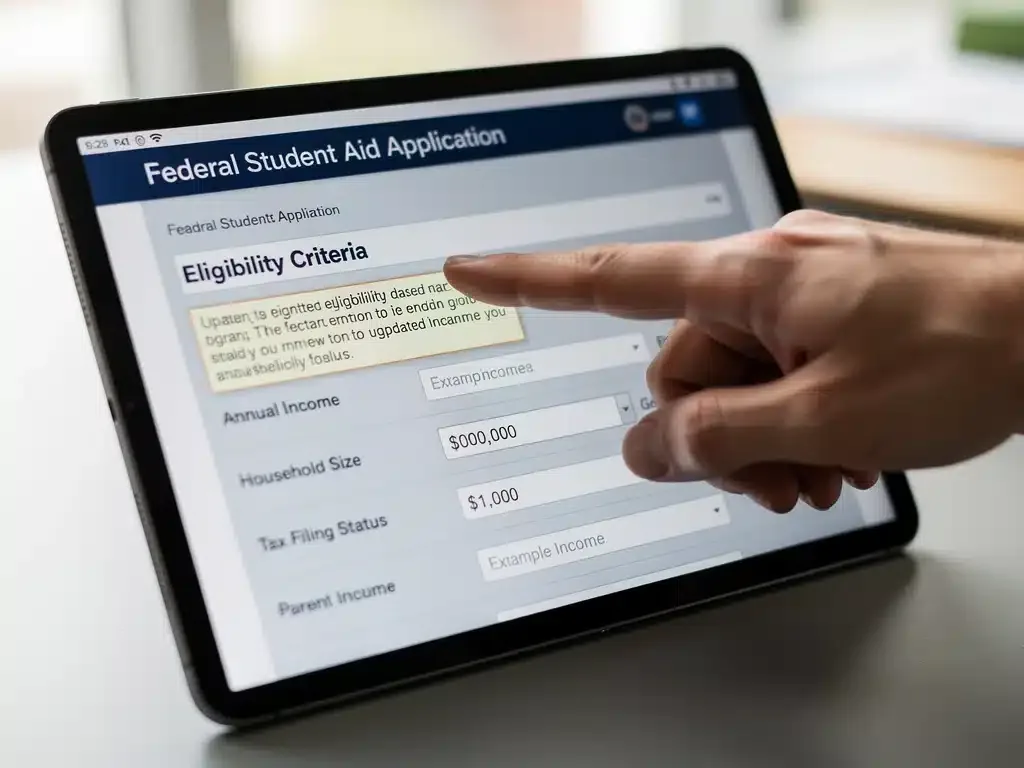
Revised Eligibility Criteria for Federal Student Aid
One of the most impactful changes under the FAFSA Simplification Act involves revised eligibility criteria for federal student aid.
The new formula, moving away from the Expected Family Contribution (EFC) to the Student Aid Index (SAI), will alter how financial need is calculated.
This shift is expected to qualify more students for federal financial assistance, including Pell Grants, by taking a more holistic view of a family’s financial situation. Students from lower-income backgrounds are particularly anticipated to benefit from these adjustments.
Institutions will need to update their internal systems and advising protocols to reflect these new calculations. Communication with students about their potential eligibility will be vital, ensuring they understand how the SAI impacts their aid packages.
- The Student Aid Index (SAI) replaces the Expected Family Contribution (EFC).
- More income protection allowances will be factored into the new calculation.
- The new formula aims to increase Pell Grant eligibility for many students.
Changes to Pell Grant Eligibility and Maximum Awards
The upcoming academic year will see significant modifications to Pell Grant eligibility and the potential for increased maximum awards. These changes are central to the broader goal of making higher education more affordable and accessible.
The FAFSA Simplification Act introduces a direct linkage between a student’s Adjusted Gross Income (AGI) and the federal poverty level to determine Pell Grant eligibility. This new approach simplifies the process and aims to provide more predictable awards.
Additionally, incarcerated students will regain eligibility for Pell Grants, marking a substantial policy reversal. This move is expected to support educational opportunities for a population that has historically faced significant barriers to higher education.
Expanded Access for Low-Income Students
The revised methodology for Pell Grant eligibility is specifically designed to expand access for low-income students. By aligning eligibility more closely with federal poverty guidelines, the policy ensures that those with the greatest financial need receive the most substantial support.
This expansion is expected to reduce the financial burden on families struggling to afford college tuition and living expenses.
It represents a critical step towards equity in higher education, allowing more students to pursue their academic goals without prohibitive financial obstacles.
Financial aid offices are preparing for an influx of newly eligible students and are developing resources to guide them through the application and award acceptance processes. The goal is to maximize the impact of these expanded opportunities.
- Pell Grant eligibility will be tied directly to federal poverty levels.
- Maximum Pell Grant awards are projected to increase for many recipients.
- Incarcerated individuals will once again be eligible for Pell Grants.
Updates to Federal Student Loan Programs and Repayment Options
Federal student loan programs are also subject to notable updates, particularly concerning repayment options and interest accrual. These changes aim to provide greater flexibility and relief for borrowers navigating student debt.
The Department of Education is exploring adjustments to income-driven repayment (IDR) plans, potentially offering more favorable terms for borrowers. These reforms are critical in ensuring that loan repayment remains manageable, especially for those with lower incomes.
Discussions are also ongoing regarding the capitalization of interest, a practice that adds unpaid interest to the principal balance, often leading to increased debt over time.
Policy adjustments may seek to limit or eliminate this practice in certain circumstances, providing significant relief to borrowers.
Streamlined Income-Driven Repayment Plans
Efforts are underway to streamline and improve income-driven repayment plans, making them more accessible and effective for borrowers.
The goal is to simplify the application process and ensure that payments are truly affordable based on a borrower’s income and family size.
These enhancements could include a reduction in the percentage of discretionary income required for monthly payments and a shorter timeline for loan forgiveness for certain borrowers.
Such changes would profoundly impact the financial well-being of millions of student loan holders.
Borrowers are encouraged to stay informed about these developments and to evaluate how new IDR options might benefit their specific financial situations. The Department of Education will provide detailed information as these plans are finalized.
Modifications in Institutional Reporting and Accountability
Institutions of higher education will face modifications in reporting requirements and increased accountability measures under the new federal student aid policies. These changes are intended to ensure greater transparency and responsible stewardship of federal funds.
New reporting obligations may include more detailed data on student outcomes, such as graduation rates, post-graduation employment, and average earnings. This information will help students make more informed decisions about their educational investments.
Accountability measures could also involve stricter oversight of institutions’ financial aid practices, aiming to prevent predatory lending or misleading marketing. The focus is on protecting students and ensuring that federal aid is used effectively to support educational attainment.
Enhanced Data Collection for Student Outcomes
The enhanced data collection for student outcomes will provide a clearer picture of the value and effectiveness of various educational programs.
This data will be crucial for policymakers, institutions, and prospective students in evaluating program quality and return on investment.
Institutions will need to invest in robust data systems and reporting mechanisms to comply with these new requirements. The goal is to move towards a more evidence-based approach to higher education policy and funding, prioritizing student success.
This increased transparency is expected to empower students, allowing them to compare institutions and programs more effectively based on tangible outcomes. It also holds institutions more accountable for the educational and career trajectories of their graduates.
New Provisions for Special Circumstances and Professional Judgments
The updated federal student aid policies will introduce new provisions for special circumstances and professional judgments, allowing financial aid administrators greater flexibility to address individual student needs.
This recognizes that standard formulas may not always capture unique financial situations.
These provisions will enable financial aid officers to make adjustments to a student’s aid package based on unforeseen events, such as job loss, medical emergencies, or other significant life changes. The aim is to ensure that students facing hardship are not unfairly penalized.
Guidelines for exercising professional judgment will be clarified and standardized, providing both institutions and students with a clearer understanding of the process. This flexibility is a critical component of a more compassionate and responsive financial aid system.
Greater Flexibility for Financial Aid Administrators
The increased flexibility for financial aid administrators reflects an understanding that a one-size-fits-all approach to financial aid is often inadequate. Empowering these professionals to use their discretion ensures that aid is distributed equitably and effectively.
This means that students who experience unexpected financial difficulties will have a clearer pathway to appeal their aid decisions and receive additional support if warranted. It humanizes the financial aid process, moving beyond rigid algorithms.
Institutions will be provided with training and resources to implement these new professional judgment guidelines consistently and fairly. The goal is to support students through challenging times, helping them remain enrolled and complete their studies.
Impact on International Students and Non-Citizens
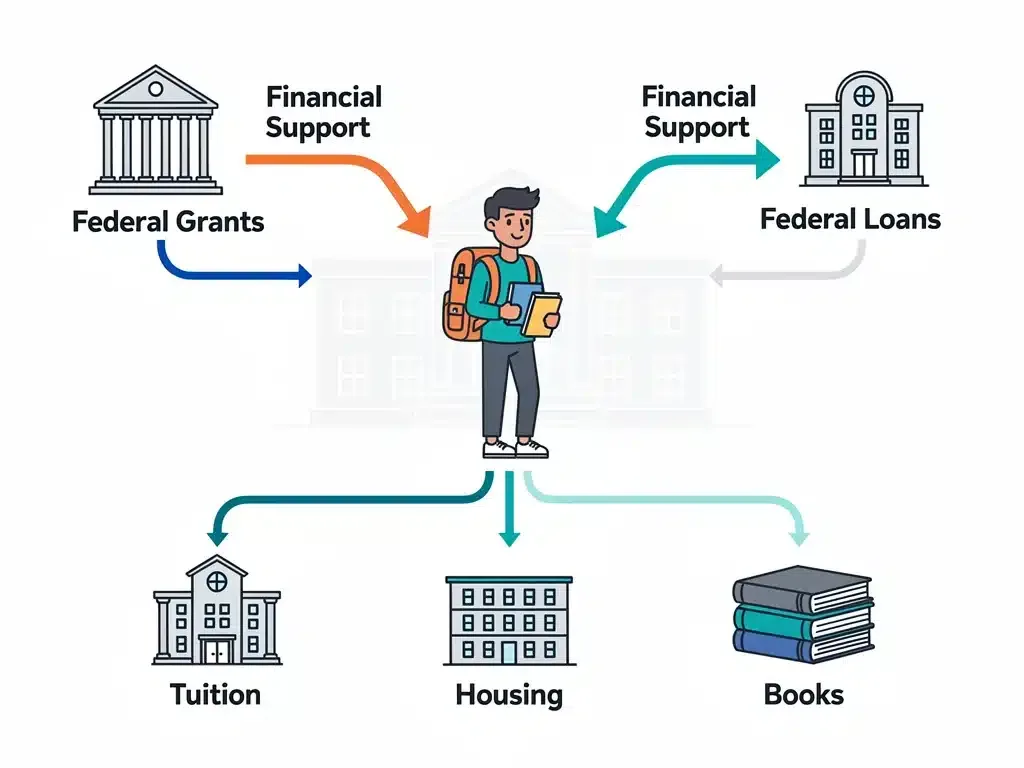
While the primary focus of federal student aid is on U.S. citizens and eligible non-citizens, the 5 Key Changes in Federal Student Aid Policy can indirectly impact international students and other non-citizens. Understanding these nuances is important for institutions and advisors.
Changes in the overall financial aid landscape, particularly in institutional aid allocation, might have ripple effects.
As federal aid policies shift, institutions may adjust their own need-based and merit-based aid strategies, which could, in turn, affect the funding available for international students.
Furthermore, the simplified FAFSA and increased Pell Grant eligibility for eligible non-citizens could lead to a broader conversation about expanding aid to other categories of non-citizens in the future.
While not directly eligible for most federal aid, the policy changes signal a more inclusive approach to higher education financing.
Clarified Definition of Eligible Non-Citizens
The FAFSA Simplification Act also clarifies and, in some cases, expands the definition of eligible non-citizens for federal student aid.
This update ensures that specific categories of non-citizens, such as those with certain visa types or humanitarian parolees, are clearly identified as eligible for aid.
This clarification helps reduce confusion for both applicants and financial aid administrators, ensuring that eligible individuals receive the support they are entitled to. It’s a move towards greater clarity and fairness in determining who qualifies for federal assistance.
Institutions must be prepared to accurately identify and process aid for these eligible non-citizens, ensuring compliance with federal guidelines. This includes updating their internal training and communication materials to reflect the latest definitions and requirements.
Navigating the Application Process for 2026-2027
Students and families preparing for the 2026-2027 academic year must be proactive in navigating the updated federal student aid application process. The changes, while designed for simplification, still require careful attention to detail and timely submission.
Familiarizing oneself with the new FAFSA form and the Student Aid Index (SAI) calculation will be paramount. Educational resources from the Department of Education and institutional financial aid offices will be invaluable in understanding these new requirements.
It is recommended to start the application process early, gather all necessary financial documentation, and seek assistance from financial aid professionals if any questions arise. Proactive engagement will ensure a smoother and more successful application experience.
Key Steps for Prospective Applicants
Prospective applicants should begin by creating an FSA ID, if they don’t already have one, as this is essential for accessing and completing the FAFSA. This unique identifier serves as a digital signature for federal student aid documents.
Next, gather all required financial documents, including tax returns, W-2 forms, and records of other income. The simplified FAFSA aims to reduce the burden, but accurate documentation remains critical for correct aid determination.
Finally, submit the FAFSA as early as possible after it becomes available for the 2026-2027 academic year. Many institutional and state aid programs operate on a first-come, first-served basis, making early submission advantageous.
- Create your FSA ID well in advance of the FAFSA opening.
- Collect all relevant financial documents, including tax information.
- Submit the FAFSA as soon as it becomes available for the 2026-2027 cycle.
Resources and Support for Students and Families
To assist students and families in understanding and adapting to the 5 Key Changes in Federal Student Aid Policy, a wealth of resources and support channels will be available. Accessing these tools is vital for a successful financial aid journey.
The Department of Education’s Federal Student Aid (FSA) website will serve as a central hub for official information, guides, and FAQs regarding the new policies. This platform is regularly updated with the latest details and announcements.
Additionally, college financial aid offices are equipped to provide personalized assistance, answer specific questions, and help students navigate the application process. These professionals are invaluable resources for understanding how the changes apply to individual circumstances.
Official Guidance and Workshops
Official guidance documents, webinars, and workshops will be released by federal and state agencies, as well as by educational institutions. These resources are designed to break down complex policy changes into understandable terms for all stakeholders.
Participating in these informational sessions can provide clarity on new eligibility rules, application procedures, and repayment options. Many institutions will also host FAFSA completion workshops to offer hands-on assistance to applicants.
Staying engaged with these official channels ensures that students and families receive accurate and up-to-date information, avoiding misinformation and potential errors in the aid application process.
Future Outlook and Long-Term Implications
The 5 Key Changes in Federal Student Aid Policy represent more than just immediate adjustments; they signal a broader shift in the philosophy and structure of federal support for higher education. The long-term implications are significant.
These reforms are expected to foster greater equity in college access and affordability, potentially altering demographic trends in higher education enrollment. The emphasis on simplification and expanded eligibility aims to reduce barriers for a wider range of students.
Policymakers will continue to monitor the effectiveness of these changes, with ongoing evaluations expected to inform future adjustments. This iterative process underscores a commitment to adapting federal aid to meet the evolving needs of students and the economy.
Potential for Further Policy Evolution
The current updates lay the groundwork for potential further policy evolution in federal student aid. As the impact of these changes becomes clearer, discussions around additional reforms may emerge, particularly concerning loan forgiveness and repayment structures.
The ongoing dialogue between Congress, the Department of Education, and higher education stakeholders will likely shape the next generation of financial aid policies. This continuous evaluation is essential for maintaining a responsive and effective system.
Students and families should remain attentive to future legislative and administrative proposals that could further refine the federal student aid landscape. Proactive engagement and informed advocacy can play a role in shaping these future developments.
| Key Policy Area | Brief Description of Change |
|---|---|
| FAFSA Simplification | Streamlined application, new Student Aid Index (SAI) replaces EFC. |
| Pell Grant Eligibility | Expanded access for low-income students, linked to poverty levels. |
| Student Loan Programs | Potential improvements to income-driven repayment plans. |
| Institutional Accountability | Increased reporting on student outcomes and financial aid practices. |
Frequently Asked Questions About Federal Student Aid Policy
What is the primary goal of the FAFSA Simplification Act?▼The primary goal is to simplify the federal student aid application process, making it easier for students and families to apply for financial assistance. It aims to increase accessibility for a broader range of students, particularly those from low-income backgrounds, by streamlining forms and calculations.
How does the Student Aid Index (SAI) differ from the EFC?▼The Student Aid Index (SAI) replaces the Expected Family Contribution (EFC) and uses a revised formula to calculate a student’s financial need. The SAI is designed to be more inclusive, often resulting in a lower index for many students, potentially qualifying more individuals for federal aid.
Will Pell Grant eligibility change significantly for 2026-2027?▼Yes, Pell Grant eligibility will change significantly. It will be more directly tied to a student’s Adjusted Gross Income (AGI) relative to the federal poverty level. This is expected to expand eligibility and potentially increase maximum awards for many low-income students.
What should I do to prepare for the new FAFSA application?▼To prepare, create or update your FSA ID, gather all necessary financial documents (tax returns, W-2s), and familiarize yourself with the new FAFSA form when it becomes available. Submitting your application early is always recommended for optimal aid consideration.
How will student loan repayment options be affected?▼Federal student loan repayment options are expected to see improvements, particularly within income-driven repayment (IDR) plans. These changes aim to offer more flexible and affordable payment terms, potentially reducing monthly burdens and shortening the path to loan forgiveness for some borrowers.
Looking Ahead
The 5 Key Changes in Federal Student Aid Policy mark a pivotal moment for higher education funding in the United States.
These adjustments underscore a commitment to making college more accessible and affordable, with a particular focus on supporting students from diverse socioeconomic backgrounds.
As these policies are fully implemented, their long-term effects on enrollment, student debt, and educational equity will become clearer.
Stakeholders are encouraged to stay informed through official channels and engage with financial aid professionals to navigate this evolving landscape effectively.