Breaking: Federal Reserve’s December 2026 Rate Hike Expectations Shift Amid Inflation Data
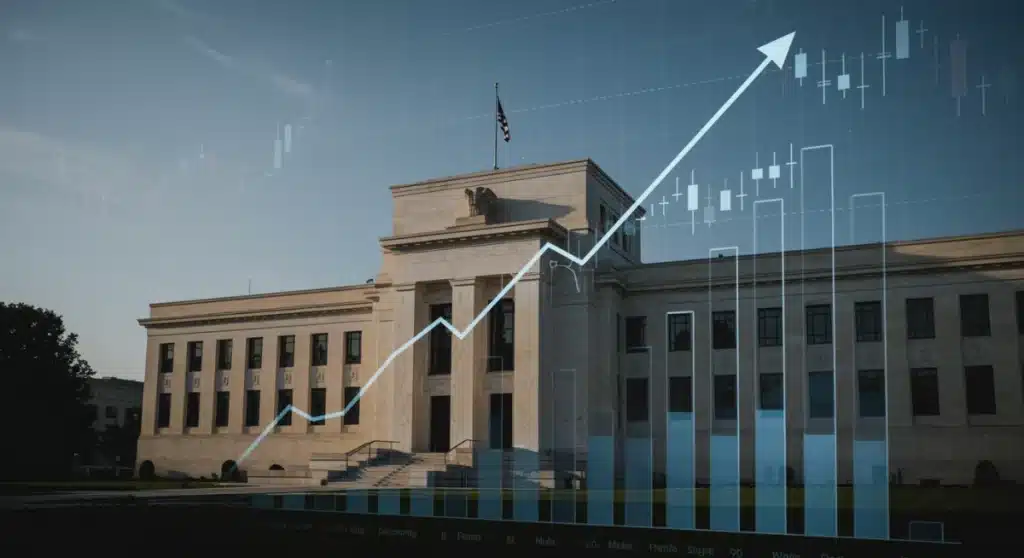
Recent shifts in Federal Reserve Rate Hike expectations for December 2026 have sent ripples through the financial markets. As fresh inflation data emerges, the once-clear path for monetary policy is being aggressively redrawn by analysts and investors alike.
This updated economic outlook stems from a complex interplay of consumer price indices and labor market resilience. Such volatility forces a total reevaluation of the central bank’s terminal borrowing costs, directly impacting the strategic positioning of American portfolios.
Navigating these fluctuating projections is essential for maintaining long-term fiscal health and informed decision-making. We provide a precise breakdown of these tightening cycles to ensure you understand how shifting benchmark costs will affect your bottom line.
Understanding the Recent Shift in Rate Hike Expectations
The landscape surrounding the Federal Reserve’s monetary policy has become increasingly dynamic, with recent inflation data playing a pivotal role in recalibrating expectations.
What was once a relatively clear path for December 2026 rate hikes is now subject to significant revision, driven by persistent inflationary pressures. This reevaluation is not merely a theoretical exercise but has tangible consequences for financial markets and economic stability.
Analysts are closely scrutinizing every piece of economic data, from consumer price indices to employment figures, to forecast the Fed’s next moves.
The consensus view on the timing and magnitude of future rate adjustments has undergone considerable revision, reflecting the evolving economic environment. This constant flux necessitates a continuous re-assessment of investment strategies and financial planning.
The Federal Reserve, in its dual mandate of maximizing employment and maintaining price stability, faces a delicate balancing act. The current inflationary environment, coupled with robust but potentially slowing economic growth, presents a complex challenge.
The perceived necessity of a Federal Reserve Rate Hike in December 2026 is now less certain, prompting widespread discussion and debate among economists and investors.
Inflation Data: The Primary Catalyst
Recent inflation reports have consistently shown higher-than-anticipated figures, challenging earlier predictions of a more transitory inflationary period.
Core inflation, which excludes volatile food and energy prices, has remained stubbornly elevated, indicating broader price pressures across the economy. This persistence is a key factor in the changing outlook for the Federal Reserve Rate Hike.
The Consumer Price Index (CPI) and Producer Price Index (PPI) have been particularly influential, painting a picture of widespread price increases.
These indicators suggest that inflationary forces are more deeply entrenched than previously assumed, compelling the Federal Reserve to reconsider its long-term strategy. The market’s reaction to these reports has been swift, with futures contracts reflecting increased uncertainty.
- Higher-than-expected CPI and PPI figures.
- Persistent core inflation indicating broad price pressures.
- Challenging the ‘transitory’ inflation narrative.
- Market re-pricing of future rate hike probabilities.
Factors Influencing the Fed’s Decision-Making
Beyond inflation data, several other factors weigh heavily on the Federal Reserve’s decision-making process regarding a Federal Reserve Rate Hike. Global supply chain disruptions, geopolitical events, and labor market dynamics all contribute to the complex economic puzzle.
Each of these elements can either exacerbate or alleviate inflationary pressures, directly impacting the Fed’s policy trajectory.
The strength of the labor market, characterized by low unemployment rates and rising wages, presents a mixed signal. While indicative of a robust economy, it also contributes to upward wage-price spirals, complicating inflation control efforts.
The Fed must carefully assess whether wage growth is sustainable or if it risks fueling further inflationary pressures.
Furthermore, international economic conditions and the strength of the U.S. dollar play a role. A strong dollar can help mitigate imported inflation, but it can also dampen export competitiveness.
The interconnectedness of the global economy means that the Federal Reserve cannot make decisions in isolation, and international factors will continue to influence their stance on a potential Federal Reserve Rate Hike in December 2026.
Market Reactions and Investor Sentiment
Financial markets have responded with heightened volatility to the shifting expectations surrounding the Federal Reserve Rate Hike.
Bond yields, equity valuations, and currency markets have all experienced significant movements as investors attempt to price in the revised probabilities. This market sensitivity underscores the profound impact of central bank policy on asset prices and investor confidence.
Long-term Treasury yields have seen considerable fluctuations, reflecting changing perceptions of future interest rates and inflation risk.
Equity markets have also reacted, with growth stocks often being more sensitive to rising interest rate expectations due to their reliance on future earnings. The uncertainty surrounding the Fed’s path creates a challenging environment for portfolio management.
The U.S. dollar has demonstrated resilience, often strengthening in anticipation of higher rates, which can have implications for international trade and commodity prices.
Currency traders are closely watching the Fed’s communication for any hints about future policy, as even subtle shifts in rhetoric can trigger significant market movements. The market’s interpretation of a potential Federal Reserve Rate Hike is therefore critical.
Impact on Bond Market and Yields
The bond market is particularly sensitive to changes in interest rate expectations, as bond prices move inversely to yields. When the likelihood of a Federal Reserve Rate Hike increases, bond yields tend to rise, and bond prices fall.
This dynamic directly affects fixed-income investors and has broader implications for borrowing costs across the economy.
Short-term Treasury yields, which are more directly influenced by the Fed’s policy rates, have shown significant responsiveness to recent inflation data.
Longer-term yields, while also reacting to Fed expectations, are additionally influenced by inflation expectations and economic growth prospects. The yield curve’s shape provides valuable insights into market sentiment regarding the future economic trajectory.
Corporate bond markets also feel the ripple effects, with borrowing costs for companies potentially increasing. This can impact corporate investment and expansion plans, ultimately affecting economic growth.
The bond market’s reaction to the evolving Federal Reserve Rate Hike narrative is a critical barometer of financial conditions.
Equity Market Volatility and Sectoral Shifts
Equity markets have experienced increased volatility as investors grapple with the implications of potential interest rate adjustments and persistent inflation. Sectors that are highly sensitive to interest rates, such as technology and real estate, often see greater fluctuations.
The prospect of a Federal Reserve Rate Hike can lead to a re-evaluation of valuations, particularly for companies with high growth expectations.
Conversely, sectors that tend to perform well in inflationary environments, such as energy and materials, might see increased interest. Financial stocks can also benefit from higher interest rates, as they typically lead to wider net interest margins for banks.
This sectoral rotation is a common feature of periods marked by shifting monetary policy expectations.
Investors are increasingly focusing on companies with strong balance sheets and consistent cash flows that are better positioned to weather periods of higher interest rates and economic uncertainty.
The changing outlook for the Federal Reserve Rate Hike is prompting a shift in investment strategies, favoring resilience and value over pure growth in some instances.
Potential Financial Impact on Households and Businesses
The shifting expectations for a Federal Reserve Rate Hike in December 2026 have profound implications for both households and businesses across the United States.
Changes in interest rates directly influence borrowing costs, savings returns, and overall economic activity. Understanding these potential impacts is crucial for informed financial decision-making.
For households, higher interest rates translate to increased costs for mortgages, auto loans, and credit card debt. This can reduce disposable income and impact consumer spending, which is a significant driver of economic growth.
Conversely, savers might see higher returns on their deposits, though these gains often struggle to keep pace with inflation.
Businesses, particularly those reliant on financing for expansion or operations, could face higher borrowing costs, potentially slowing investment and hiring.
Small businesses, often more sensitive to interest rate fluctuations, might find it challenging to secure affordable credit. The overall economic environment, shaped by the Fed’s policy, dictates the ease of doing business and personal financial health.
Mortgage Rates and Housing Market
The housing market is particularly sensitive to interest rate changes, with shifts in the projected Federal Reserve Rate Hike directly influencing mortgage rates.
Higher rates lead to higher monthly mortgage payments, reducing affordability and potentially cooling demand for homes. This can affect both new home sales and the refinancing market.
Prospective homebuyers are closely monitoring these developments, as even small increases in mortgage rates can significantly impact their purchasing power. Existing homeowners with adjustable-rate mortgages may also see their monthly payments rise.
The housing market, a critical component of the U.S. economy, faces headwinds from tightening monetary policy.
Real estate investors and developers also consider the cost of capital when planning projects. Increased borrowing costs can reduce profit margins and lead to a slowdown in construction activity.
The Federal Reserve’s stance on future rate hikes is therefore a key determinant of the housing market’s trajectory and its contribution to economic growth.
Consumer Spending and Credit Costs
Changes in the expected Federal Reserve Rate Hike directly influence the cost of consumer credit, impacting everything from credit card interest rates to personal loans.
When rates rise, borrowing becomes more expensive, which can temper consumer spending. This is a deliberate mechanism used by the Fed to cool an overheating economy and curb inflation.
Consumers holding variable-rate debt, such as certain credit cards or lines of credit, will likely see their interest payments increase. This can strain household budgets, especially for those already struggling with rising living costs due to inflation.
Discretionary spending, a key component of economic activity, often takes a hit in such environments.
Conversely, higher rates can incentivize saving, as bank deposit rates may improve. However, the overall impact on consumer behavior is complex, often involving a trade-off between higher saving incentives and increased borrowing costs.
The Federal Reserve’s decisions are designed to influence these behaviors to achieve its economic objectives.
The Federal Reserve’s Communication Strategy
The Federal Reserve’s communication strategy is a critical tool for managing market expectations and guiding economic behavior. In light of the shifting outlook for a Federal Reserve Rate Hike, clear and consistent communication from Fed officials is more important than ever.
Their statements, speeches, and meeting minutes are meticulously analyzed by economists and investors for clues about future policy direction.
Forward guidance, where the Fed provides insights into its future policy intentions, helps to reduce uncertainty and stabilize markets.
However, in an environment of rapidly evolving economic data, this guidance can sometimes be difficult to maintain or may need to be adjusted, leading to market reactions. The challenge lies in balancing transparency with flexibility.
The Fed’s dual mandate requires it to communicate carefully about both inflation and employment. Any perceived imbalance in its focus can lead to market misinterpretations.
As expectations for the Federal Reserve Rate Hike continue to evolve, the clarity and consistency of the Fed’s messaging will be paramount in maintaining market confidence and guiding economic actors.
Key Statements and Official Commentary
Recent statements from Federal Reserve officials have provided crucial insights into their evolving perspectives on inflation and interest rates.
Speeches by the Chair, Vice Chair, and regional Fed presidents are closely watched for any deviations from previous stances or new emphasis on specific economic indicators.
These commentaries often precede or accompany significant policy shifts related to the Federal Reserve Rate Hike.
The Federal Open Market Committee (FOMC) meeting minutes are another vital source of information, offering a detailed look into the discussions and debates among policymakers.
These minutes reveal the range of opinions within the Fed and the rationale behind their collective decisions, helping to demystify the central bank’s thought process regarding future monetary policy.
Market participants also pay close attention to the dot plot, which illustrates individual FOMC members’ projections for the federal funds rate over the next few years.
Shifts in the median dot plot can signal a change in the Fed’s collective outlook for a Federal Reserve Rate Hike and its overall monetary policy stance, providing a forward-looking perspective for investors.
The Role of Economic Projections
The Federal Reserve regularly publishes its Summary of Economic Projections (SEP), which includes forecasts for GDP growth, unemployment, inflation, and the federal funds rate.
These projections are instrumental in understanding the Fed’s baseline expectations for the economy and its policy response, particularly concerning a Federal Reserve Rate Hike.
While these projections are not guarantees, they represent the collective wisdom of FOMC participants and provide a framework for market analysis.
Any significant revision to these projections, especially regarding inflation or the federal funds rate, can signal a shift in the Fed’s assessment of the economic outlook and its willingness to adjust monetary policy.
The SEP’s inflation forecasts, in particular, are under intense scrutiny given the current economic climate.
If the Fed’s projections for inflation remain elevated for longer than previously anticipated, it would strongly suggest a greater likelihood of a Federal Reserve Rate Hike, or a more aggressive one, to bring prices back under control.
These projections serve as a critical guide for understanding the Fed’s strategic direction.

Global Economic Context and External Pressures
The Federal Reserve’s decisions, including the trajectory of a potential Federal Reserve Rate Hike, are not made in a vacuum. The global economic context and various external pressures significantly influence the U.S. economic outlook and, consequently, the Fed’s monetary policy.
International trade dynamics, geopolitical events, and the economic performance of major trading partners all play a role.
For instance, disruptions in global supply chains, often exacerbated by international conflicts or health crises, can contribute to inflationary pressures within the U.S. economy.
Conversely, a slowdown in global demand could potentially ease some of these pressures. The Fed must consider these external factors when assessing the appropriate course of action.
The monetary policies of other major central banks also factor into the equation. Divergent policy paths can lead to currency fluctuations and capital flows that impact the U.S. economy.
The Federal Reserve’s approach to a Federal Reserve Rate Hike in December 2026 will therefore be influenced by a careful consideration of both domestic and international economic conditions.
Geopolitical Events and Supply Chain Disruptions
Recent geopolitical events have had a tangible impact on global commodity markets and supply chains, contributing to inflationary pressures worldwide.
Conflicts, trade disputes, and political instability can disrupt the production and transportation of goods, leading to higher prices for consumers and businesses alike.
These external shocks complicate the Federal Reserve‘s efforts to manage inflation and influence its decisions on a Federal Reserve Rate Hike.
Energy prices, in particular, are highly susceptible to geopolitical developments. Spikes in oil and gas prices can feed through to a wide range of goods and services, making the Fed’s job of achieving price stability more challenging.
The interconnectedness of global markets means that events far from U.S. borders can have direct consequences on domestic inflation.
Supply chain resilience has become a major focus for policymakers. Efforts to diversify supply sources and reduce reliance on single regions are underway, but these are long-term solutions.
In the interim, the Federal Reserve must navigate an environment where external disruptions can rapidly alter the economic landscape and influence the timing and necessity of a Federal Reserve Rate Hike.
International Monetary Policy Divergence
The monetary policy decisions of other major central banks, such as the European Central Bank (ECB), the Bank of England (BoE), and the Bank of Japan (BoJ), can create a divergence in global interest rates.
This divergence can lead to significant currency movements, impacting the U.S. dollar’s value and, by extension, U.S. trade and inflation. The Federal Reserve must consider these international dynamics when formulating its own policy regarding a Federal Reserve Rate Hike.
A stronger U.S. dollar, often a result of higher U.S. interest rates relative to other countries, can make U.S. exports more expensive and imports cheaper. While cheaper imports can help mitigate domestic inflation, a strong dollar can also hurt export-oriented industries.
The Fed’s policy choices therefore have global ramifications, and vice versa.
Capital flows are also influenced by interest rate differentials. If U.S. rates are significantly higher, capital may flow into U.S. assets, potentially strengthening the dollar further.
The Federal Reserve’s assessment of these international monetary policy divergences is a critical component of its decision-making process concerning the timing and magnitude of any future Federal Reserve Rate Hike.
Future Outlook and Key Indicators to Watch
The path forward for the Federal Reserve and its December 2026 rate hike expectations remains fluid, highly dependent on incoming economic data.
While current inflation trends suggest a hawkish stance may be necessary, the Fed’s commitment to a data-driven approach means flexibility is key. Investors and the public should closely monitor several key indicators to anticipate future policy shifts.
Future inflation reports, particularly the monthly CPI and PCE (Personal Consumption Expenditures) data, will be paramount. Any signs of sustained deceleration in price increases could lead to a softening of the Fed’s stance.
Conversely, persistent high inflation would reinforce the need for further tightening, directly impacting the likelihood and scale of a Federal Reserve Rate Hike.
Labor market data, including unemployment rates, wage growth, and job openings, will also be crucial. A significant weakening in the labor market could prompt the Fed to pause or even reverse its tightening cycle, even if inflation remains somewhat elevated.
The delicate balance between controlling inflation and maintaining full employment will continue to guide the Fed’s decisions regarding a Federal Reserve Rate Hike.
Upcoming Economic Data Releases
A series of upcoming economic data releases will significantly influence the Federal Reserve’s thinking on a potential Federal Reserve Rate Hike.
These reports provide a fresh snapshot of the economy’s health and inflationary pressures, shaping market expectations and policy discussions. Investors should mark their calendars for these critical announcements.
Key releases include monthly inflation reports, such as the CPI and PCE, which are direct measures of price changes. These will be scrutinized for any signs of moderation or acceleration in inflationary trends.
Additionally, retail sales figures offer insights into consumer spending, a major component of GDP and an indicator of economic momentum.
Employment data, including the monthly jobs report, average hourly earnings, and jobless claims, will provide crucial context on the labor market’s strength and potential wage pressures.
Manufacturing and services sector PMIs (Purchasing Managers’ Index) will also be watched for signs of economic expansion or contraction. Each of these reports contributes to the complex mosaic that informs the Fed’s decisions on a Federal Reserve Rate Hike.
Federal Reserve Policy Meetings and Statements
The scheduled Federal Open Market Committee (FOMC) meetings are critical junctures for monetary policy, where decisions on the federal funds rate are made.
The statements released after these meetings, along with the subsequent press conferences by the Fed Chair, offer the most direct insights into the central bank’s current thinking and future intentions regarding a Federal Reserve Rate Hike.
Market participants will be looking for any changes in the Fed’s language, particularly concerning its assessment of inflation, economic growth, and the labor market. Even subtle shifts in rhetoric can signal a change in policy direction.
The minutes from these meetings, released several weeks later, provide a more detailed account of the discussions and disagreements among policymakers.
Understanding the nuances of these communications is essential for anticipating potential shifts in the Federal Reserve’s stance on a future Federal Reserve Rate Hike.
The Fed aims for transparency, but interpreting its signals requires careful attention to detail and an understanding of its economic mandate and historical policy responses. These meetings are pivotal for the financial world.
| Key Point | Brief Description |
|---|---|
| Rate Hike Shift | Expectations for December 2026 Federal Reserve rate hike are changing due to inflation. |
| Inflation Data | Persistent high inflation is the main driver behind the reevaluation of policy. |
| Market Impact | Increased volatility in bonds, equities, and currency markets observed. |
| Household Effect | Higher borrowing costs for mortgages, loans, and credit cards are anticipated. |
Frequently Asked Questions About Federal Reserve Rate Hikes
The primary driver is persistent and higher-than-expected inflation data, particularly core inflation. Supply chain disruptions, robust labor market conditions, and global economic factors also contribute to the Federal Reserve’s evolving outlook for a potential rate hike.
A rate hike typically leads to higher borrowing costs for mortgages, auto loans, and credit cards. This can reduce disposable income for many households and potentially slow down consumer spending. Savers might see slightly better returns, but overall, it tightens financial conditions.
The Federal Reserve aims to achieve maximum employment and maintain price stability. In the current environment, it balances controlling inflation with ensuring the labor market remains strong. Decisions on a Federal Reserve Rate Hike reflect this delicate balance, aiming for sustainable economic growth.
Investors should closely monitor inflation reports (CPI, PCE), labor market data (unemployment, wage growth), and retail sales. Additionally, Federal Reserve meeting minutes and official statements provide crucial insights into policy direction and the likelihood of a Federal Reserve Rate Hike.
Global supply chain disruptions, geopolitical events impacting commodity prices, and the monetary policies of other central banks all play a role. These external pressures can affect U.S. inflation and economic stability, thus influencing the Federal Reserve’s approach to interest rate adjustments.
Impact and Implications
The shifting expectations for the Federal Reserve Rate Hike in December 2026 underscore the dynamic nature of economic policy in response to evolving data.
These adjustments are not isolated events but rather integral parts of a broader strategy to maintain economic stability amidst inflationary pressures. The implications extend far beyond financial markets, touching every aspect of economic life, from household budgets to corporate investment decisions.
What happens now involves a careful watch on how the Federal Reserve communicates its evolving stance and how effectively its policies navigate the tightrope between inflation control and economic growth.
The coming months will be critical, with each new data release and official statement providing further clarity or complexity. Understanding these ongoing developments is essential for navigating the future financial landscape.
As the Federal Reserve continues to adapt its strategy, individuals and businesses must remain agile in their financial planning.
The ongoing re-evaluation of the Federal Reserve Rate Hike highlights the importance of staying informed and prepared for potential shifts in the economic environment. The journey toward long-term price stability is complex and requires continuous monitoring and adaptation.