New 2026 Unemployment Benefit Extensions: What You Need to Know About the 6-Month Federal Program
Advertisements
Fortunately, a massive relief measure is rolling out across the country, as the newly approved 2026 Unemployment Benefit Extensions offer an essential six-month lifeline to qualified individuals.
This robust federal program aims to bridge the gap for displaced workers adapting to sweeping industry disruptions and corporate downsizing.
By temporarily injecting extra funding into state-managed workforce agencies, the emergency legislation secures longer-term financial aid while offering enhanced re-employment resources for those actively hunting for their next role.
Missing out on strict filing deadlines or confusing eligibility requirements could mean leaving thousands of dollars on the table during your job hunt. Here is the straightforward breakdown of who qualifies for this prolonged assistance, how the application process works, and how to fast-track your enrollment.
Understanding the 2026 Unemployment Extensions Framework
The federal government has unveiled the framework for the 2026 Unemployment Extensions, outlining a 6-month program designed to provide financial stability.
This initiative is a direct response to ongoing economic considerations, aiming to mitigate potential hardships for a significant portion of the workforce. Policy makers have emphasized the temporary nature of this extension, underscoring its role as a bridge during a transitional period.
Initial reports from congressional committees and the Department of Labor highlight the program’s structure, which includes specific criteria for eligibility and benefit amounts.
These details are crucial for both states, which will administer the benefits, and individuals, who must meet certain conditions to qualify. The program seeks to balance immediate relief with long-term economic recovery strategies.
Stakeholders, including labor organizations and economic analysts, have weighed in on the potential impact of these 2026 Unemployment Extensions.
While generally welcomed, there are ongoing discussions about the scope and duration, particularly concerning how it integrates with existing state-level unemployment insurance programs. The federal program aims to supplement, not replace, state benefits.
Key Eligibility Criteria for the Federal Program
Determining eligibility for the 2026 Unemployment Extensions is a critical first step for potential applicants. The federal guidelines specify a range of conditions that individuals must meet to receive these extended benefits.
These criteria are designed to target support effectively, ensuring that assistance reaches those most in need while preventing widespread misuse.
Applicants will typically need to demonstrate that they have exhausted their standard state unemployment benefits and remain unemployed or underemployed due to qualifying reasons.
Furthermore, there may be requirements related to actively seeking work, participating in job training programs, or demonstrating a willingness to accept suitable employment. Each state may also have specific administrative nuances.
It is imperative for individuals to review the detailed eligibility requirements as released by the Department of Labor and their respective state unemployment agencies. Failure to meet all criteria could result in delays or denial of benefits.
The New 2026 Unemployment Benefit Extensions are designed with specific parameters to ensure targeted assistance.
Who Qualifies for Extended Benefits
- Individuals who have exhausted their regular state unemployment insurance benefits.
- Those who are able, available, and actively seeking work, unless specifically exempted.
- Applicants who meet specific income and work history thresholds as defined by federal and state laws.
Application Process and Required Documentation
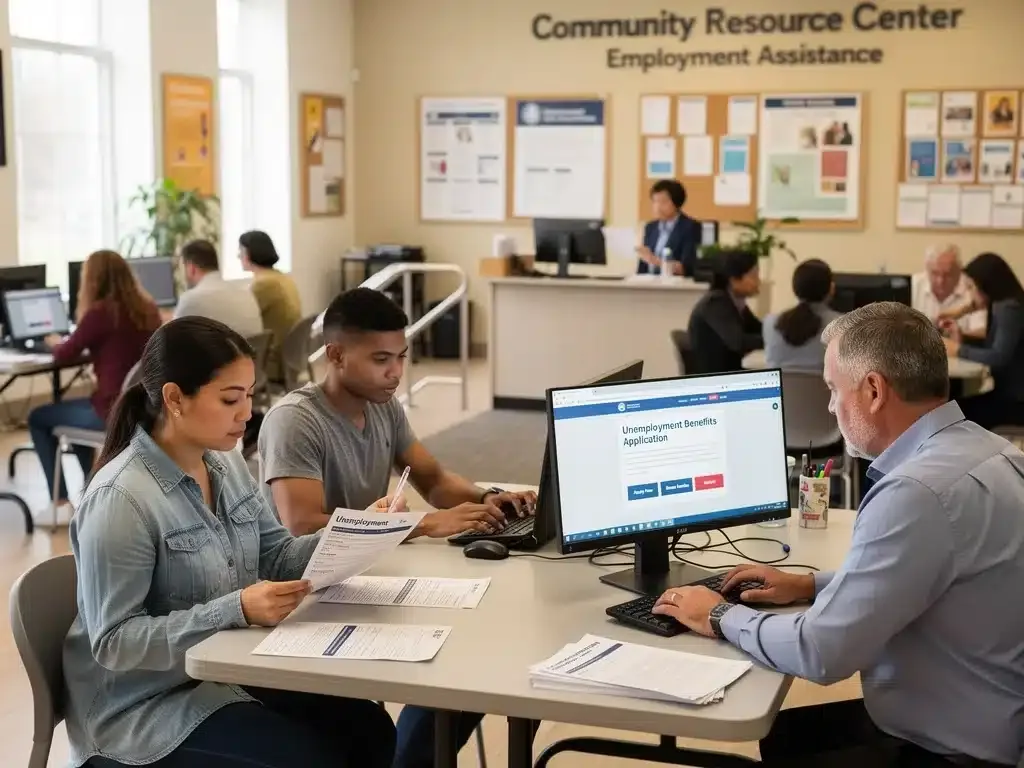
Applying for the 2026 Unemployment Extensions involves a structured process, typically initiated through state unemployment agencies.
While the federal government sets the overarching rules, states are responsible for the day-to-day administration, including processing applications and disbursing funds. Therefore, understanding your state’s specific portal and procedures is paramount.
Prospective beneficiaries should prepare a comprehensive set of documents to expedite their application. This usually includes personal identification, proof of past employment, wage records, and evidence of previous unemployment benefit exhaustion.
Accurate and complete submission of these materials can significantly reduce processing times and ensure timely access to the New 2026 Unemployment Benefit Extensions.
Many states now offer online application portals, which are often the most efficient way to apply. However, telephone and in-person options may also be available for those who require additional assistance or lack internet access.
It is advisable to check your state’s Department of Labor website for the most current application methods and requirements to navigate the process smoothly.
Essential Documents for Application
- State-issued identification (Driver’s License, State ID).
- Social Security number and proof of legal work authorization.
- Detailed employment history, including employer names, addresses, and dates of employment.
- Wage records, such as W-2 forms or pay stubs, from the past 18 months.
Recent Updates and Time-Sensitive Information
The landscape of the 2026 Unemployment Extensions is dynamic, with recent updates continually shaping the program’s implementation and reach.
Officials from the Department of Labor have released new guidance concerning certain administrative procedures and clarified benefit calculation methods. These updates are crucial for both state agencies and individuals seeking to understand the most current operational details.
One significant recent update involves adjustments to the weekly benefit amounts in certain states, reflecting changes in economic indicators and cost-of-living adjustments.
Additionally, there have been clarifications regarding the interaction of federal extensions with state-specific programs, ensuring a seamless transition for beneficiaries. These time-sensitive details require immediate attention from all stakeholders.
Furthermore, new deadlines for initial applications and continued eligibility certifications have been announced, underscoring the time-sensitive nature of the New 2026 Unemployment Benefit Extensions.
Staying informed through official government channels and trusted news sources is essential to avoid missing critical windows for application or renewal. The program’s success hinges on timely communication and proactive engagement.
Impact on Individuals and the US Economy
The 2026 Unemployment Extensions are poised to have a substantial impact on both individual financial stability and the broader US economy.
For millions of Americans facing unemployment, these extended benefits represent a vital lifeline, providing essential funds for housing, food, and other necessities. This direct financial support can prevent further economic hardship and allow individuals to focus on re-entering the workforce.
From a macroeconomic perspective, the federal program is anticipated to inject significant capital into local economies through consumer spending.
This increased demand for goods and services can help stimulate economic activity, supporting businesses and preserving jobs. Economic analysts suggest that the New 2026 Unemployment Benefit Extensions could play a crucial role in maintaining economic momentum during periods of uncertainty.
However, the impact is not without its complexities. There are ongoing debates about the potential effects on labor force participation rates and the long-term fiscal implications of such extensive federal spending.
Policymakers will closely monitor these factors to assess the overall effectiveness and sustainability of the 2026 Unemployment Extensions. The goal is to strike a balance between support and economic recovery.
State-Specific Implementations and Variations
While the 2026 Unemployment Extensions are a federal program, their implementation varies significantly from state to state.
Each state’s unemployment agency is responsible for administering the benefits according to federal guidelines, but they also incorporate their unique state laws and procedures. This means that an applicant’s experience can differ based on their geographic location.
Some states may have additional eligibility requirements or different reporting mechanisms for continued benefits. It is common for states to have varying weekly benefit amounts, even with federal supplements, due to differences in their base wage calculations.
These state-specific nuances are critical for applicants to understand to ensure a smooth process for the New 2026 Unemployment Benefit Extensions.
Individuals are strongly advised to consult their state’s official unemployment website or contact their local Department of Labor office for precise information relevant to their situation.
Relying solely on general federal guidelines may lead to confusion or missed opportunities. The complexity of state-specific implementations underscores the need for localized research.
Navigating State Differences
- Consult your state’s Department of Labor for specific application portals and forms.
- Understand state-specific reporting requirements for continued eligibility.
- Be aware of potential variations in weekly benefit amounts and maximum benefit periods.
Anticipated Challenges and Solutions
The rollout of the 2026 Unemployment Extensions is not without its anticipated challenges, both for administering agencies and for beneficiaries. States may face logistical hurdles in processing a potentially large volume of applications, leading to delays in benefit disbursement.
Technology infrastructure and staffing levels at state unemployment offices will be crucial factors in determining efficiency.
For individuals, challenges might include navigating complex application forms, understanding eligibility nuances, or experiencing technical issues with online portals.
The time-sensitive nature of the New 2026 Unemployment Benefit Extensions also adds pressure, requiring prompt action to avoid missing deadlines. Clear communication and accessible support resources are vital to overcoming these obstacles.
To address these challenges, federal and state agencies are implementing various solutions, including enhanced online support, dedicated helplines, and partnerships with community organizations.
Efforts are being made to streamline processes and improve user experience to ensure that the 2026 Unemployment Extensions reach eligible individuals efficiently. Proactive engagement from applicants can also help mitigate potential issues.
Future Outlook and Potential Adjustments
The 6-month federal program for the 2026 Unemployment Extensions is designed with a specific timeframe, but its future outlook remains a subject of ongoing discussion and potential adjustments.
As the program progresses, policymakers will closely monitor economic indicators, unemployment rates, and the overall effectiveness of the extensions. This continuous evaluation could lead to modifications or further extensions if economic conditions warrant.
Any potential adjustments to the New 2026 Unemployment Benefit Extensions would likely be based on legislative action and economic data, rather than automatic renewals.
Stakeholders, including economic experts and advocacy groups, will continue to provide input, influencing future policy decisions. The dynamic nature of the economic recovery means that flexibility in social programs is often necessary.
Individuals currently receiving or planning to apply for the 2026 Unemployment Extensions should remain vigilant for official announcements regarding any changes to the program.
While the current 6-month period is set, the broader context of economic policy means that future developments are always possible. Staying informed through reliable sources is the best approach to prepare for any eventualities.
| Key Program Aspect | Brief Description |
|---|---|
| Program Duration | Federal program extends benefits for 6 months in 2026. |
| Eligibility Focus | Primarily for those exhausting state benefits and actively seeking work. |
| Application Process | Managed by state agencies; requires specific documentation. |
| Economic Impact | Aims to stabilize individual finances and stimulate local economies. |
Frequently Asked Questions About 2026 Unemployment Extensions
What are the New 2026 Unemployment Benefit Extensions?▼These are federally funded extensions to unemployment benefits, providing an additional 6 months of financial support for eligible individuals in 2026. This program aims to assist those who have exhausted their standard state unemployment insurance and continue to face unemployment or underemployment.
Who is eligible for these 2026 Unemployment Extensions?▼Eligibility generally requires individuals to have exhausted their state benefits, be actively seeking work, and meet specific federal and state criteria. It’s crucial to check your state’s Department of Labor website for precise, localized requirements, as these can vary significantly.
How do I apply for the New 2026 Unemployment Benefit Extensions?▼Applications are typically processed through your state’s unemployment agency, often via online portals. You will need to provide identification, employment history, wage records, and proof of prior benefit exhaustion. Timely submission of accurate documentation is key to a smooth process.
What recent updates have been made to the program?▼Recent updates include clarifications on eligibility, adjustments to weekly benefit amounts in certain states, and new deadlines for applications and certifications. It is important to frequently consult official government sources for the most current and time-sensitive information regarding the 2026 Unemployment Extensions.
What is the anticipated economic impact of these extensions?▼The extensions are expected to provide significant financial relief to individuals, supporting consumer spending and local economies. While beneficial for stability, economists are also monitoring potential impacts on labor force participation and long-term fiscal health, balancing support with recovery goals.
Looking Ahead: Navigating the 2026 Unemployment Extensions
The New 2026 Unemployment Benefit Extensions represent a significant federal effort to stabilize the financial lives of many Americans. Understanding the program’s parameters, from eligibility to application, is crucial for those who may benefit.
The time-sensitive nature of these extensions demands prompt attention and ongoing vigilance from applicants.
As the 6-month federal program unfolds, continued monitoring of official updates from the Department of Labor and state agencies will be essential.
Economic conditions and policy discussions may lead to further adjustments, making it important for individuals to stay informed. The success of the 2026 Unemployment Extensions hinges on both effective administration and proactive engagement from the public.
Ultimately, these extended benefits aim to provide a necessary bridge for individuals navigating economic challenges, supporting both personal well-being and broader economic stability.
The New 2026 Unemployment Benefit Extensions are a critical component of the nation’s financial safety net, and their implementation will be closely watched.